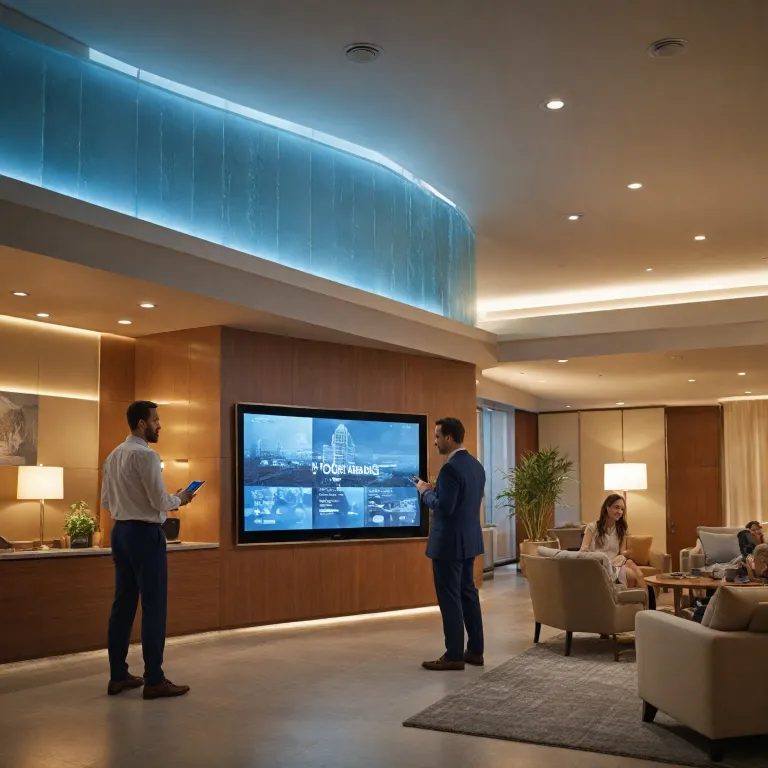
Strategic role of hospitality video distribution systems in the tourism ecosystem
Within the tourism ecosystem, a modern hospitality video distribution system has become critical infrastructure rather than a discretionary upgrade. For institutions publiques and professional federations, video and audio video capabilities now influence territorial attractiveness, investor confidence, and long term competitiveness. When a hotel aligns its content, room entertainment, and hospitality services with regional branding, the guest experience becomes a shared asset for the entire destination.
Hospitality video distribution systems allow hotels to route video, audio, and digital signage from centralized sources to every room and public area. These systems can combine IPTV, RF, and HDMI based architectures, using encoders decoders, fiber cables, and existing coaxial networks to optimize CAPEX. In this context, ZeeVee has emerged as a reference provider of scalable video distribution solutions, while Amadeus Hospitality and StreamVision focus on content orchestration and in room entertainment services.
For clusters tourisme and institutional investors, the shift from analog audio to integrated digital audio and video walls changes how capital projects are evaluated. A single distribution system can support an unlimited number of rooms, bars restaurants, and meeting spaces, which improves the ROI profile of large properties. By standardizing on interoperable systems, regional hotel networks can negotiate better conditions, share case studies, and accelerate deployment of advanced entertainment options across their portfolios.
From isolated properties to coordinated networks of hospitality video systems
Professional federations and hotel groups increasingly view each hospitality video distribution system as a node in a wider digital network. When multiple hotels share standards for content formats, control interfaces, and emergency alert workflows, they gain economies of scale and operational resilience. This networked approach also supports coordinated marketing, where digital signage and room entertainment reinforce the same destination narrative.
Amadeus Hospitality illustrates this shift by combining interactive video players with a content management system that serves both individual hotel needs and brand wide campaigns. StreamVision follows a similar logic, enabling premium hotel room entertainment while centralizing control of services and sources at group level. For investors, such systems reduce fragmentation, simplify due diligence, and make it easier to benchmark guest experience and entertainment options across properties.
Partnerships with AV specialists like ZeeVee and Key Digital further strengthen this ecosystem logic for bars restaurants, resorts, and convention hotels. ZeeVee’s AV over IP solutions enable flexible video distribution, video wall deployments, and digital signage networks that can be scaled property by property. In this context, federations can promote collaborative frameworks for AV and hospitality technology partnerships, ensuring that systems, services, and content remain interoperable across diverse hotel brands.
Technical foundations that matter to institutions and investors
Behind every hospitality video distribution system lies a set of technical choices that directly affect risk, lifecycle cost, and guest satisfaction. Institutions publiques and clusters tourisme must understand how encoders decoders, HDMI matrices, and IP switches interact with existing hotel infrastructure. RF based systems can reuse coaxial cabling, while AV over IP architectures leverage structured networks and fiber cables to support higher bandwidth video and digital audio.
For hotel operators, the ability to mix analog audio, digital audio, and video sources within the same distribution system is crucial. Bars restaurants may rely on satellite sports channels, while conference areas require flexible audio video routing and video walls. In guest rooms, Pro:Idiom compatible televisions, IPTV middleware, and centralized control interfaces ensure secure content delivery and consistent room entertainment experiences.
Institutional investors increasingly request detailed case studies that quantify the impact of new systems on guest experience and RevPAR. These case studies often highlight how a single platform can manage an unlimited number of endpoints, from rooms to public video walls and emergency alert channels. To support long term ecosystem resilience, regional stakeholders can promote shared technical guidelines and strategies for building effective technology partnerships across hotel networks.
Aligning guest experience, safety, and territorial branding
A mature hospitality video distribution system does more than stream entertainment ; it orchestrates guest experience, safety, and destination storytelling. Digital signage in lobbies, corridors, and bars restaurants can promote local culture, sustainable mobility, and institutional campaigns. In rooms, curated content and room entertainment options can highlight regional attractions, public services, and partner events.
Emergency alert integration is another strategic dimension that concerns institutions publiques and regulators. When video distribution systems can override regular content on every screen, they become a powerful channel for coordinated crisis communication. This capability requires robust control layers, redundant sources, and clear governance between hotel management, local authorities, and technology providers.
For hospitality networks, harmonizing entertainment options and safety protocols across hotels strengthens brand trust and territorial resilience. EarthTV’s outdoor cameras and livestream services, for example, can feed both marketing content and real time situational awareness into the same digital ecosystem. By aligning audio video infrastructure with public communication strategies, clusters tourisme can transform hotel screens into intelligent interfaces between guests, institutions, and the wider destination.
Financing, governance, and shared value for hospitality video systems
Deploying a future ready hospitality video distribution system at scale requires coordinated financing models and governance frameworks. Institutional investors, hotel groups, and public agencies can co design funding schemes that recognize video, audio, and digital signage as strategic infrastructure. Linking these investments to long term hospitality services contracts helps secure maintenance, upgrades, and continuous content innovation.
For lenders and asset managers, the ability of systems to support an unlimited number of rooms and public zones is a key valuation factor. A flexible distribution system can adapt to repositioning scenarios, such as converting floors to extended stay units or adding bars restaurants and meeting spaces. In this context, guidance on strategic hotel loans for a resilient hospitality ecosystem becomes directly relevant to AV and room entertainment projects.
Governance must also address data, content rights, and cross property standards for guest experience. Federations can coordinate shared procurement of encoders decoders, Pro:Idiom compatible displays, and ZeeVee based video distribution platforms. By pooling case studies and performance data, institutions can refine investment criteria, prioritize interoperable systems, and ensure that audio video infrastructure continues to serve both commercial and public interest objectives.
Operational excellence and ecosystem wide performance indicators
Once a hospitality video distribution system is deployed, operational excellence becomes the main differentiator for hotel networks and their institutional partners. Centralized control platforms allow technical teams to monitor video, audio, and digital signage status across multiple hotels. Proactive management of sources, from IPTV streams to local HDMI inputs, reduces downtime and protects the perceived quality of guest experience.
Key Digital’s AV solutions for bars restaurants illustrate how standardized systems simplify daily operations and staff training. When the same control logic governs room entertainment, video walls, and emergency alert overrides, hotels can maintain consistent service levels with leaner teams. Over time, federations can benchmark properties using KPIs that link entertainment options, guest satisfaction, and occupancy trends.
To support evidence based policy, institutions publiques and clusters tourisme should encourage rigorous case study methodologies. These case studies can correlate the deployment of ZeeVee or StreamVision systems with improvements in guest experience, ancillary revenue, and regional brand perception. “Percentage of travelers consulting video from inspiration to booking: 66.67 %” and “Number of channels a fitness club can distribute using ZeeVee's solutions: 150 channels” illustrate how video distribution capacity and content influence traveler behavior at scale.
Key statistics on hospitality video distribution systems
- Percentage of travelers consulting video from inspiration to booking : 66.67 %.
- Number of channels a fitness club can distribute using ZeeVee’s solutions : 150 channels.
Frequently asked questions on hospitality video distribution systems
What is an IPTV system in the hospitality industry?
An IPTV (Internet Protocol Television) system delivers television content over IP networks, allowing hotels to provide live TV, on demand videos, and interactive services to guests. Within a hospitality video distribution system, IPTV can coexist with RF and HDMI based sources. This hybrid approach helps hotels modernize progressively while preserving parts of their legacy infrastructure.
How do AV over IP solutions benefit hotels?
AV over IP solutions enable flexible and scalable distribution of audio and video content over a hotel’s existing IP network, reducing the need for extensive cabling and allowing easy integration with other systems. For hotel groups and institutional owners, this flexibility supports phased renovations and portfolio wide standards. It also simplifies the deployment of digital signage, video walls, and centralized control interfaces.
Can existing coaxial cable infrastructure be used for modern video distribution?
Yes, RF based systems can utilize existing coaxial cables to distribute digital TV channels, minimizing the need for new wiring and reducing installation costs. This option is particularly attractive for heritage hotels and large resorts with complex building layouts. Over time, operators can complement RF with IP based distribution to support richer content and interactive services.
How do hospitality video systems enhance guest experience?
Modern systems combine high quality video, curated content, and intuitive control interfaces to create seamless room entertainment. Guests can access live channels, on demand libraries, and hotel or destination information from a single screen. When integrated with property systems, these platforms can personalize recommendations and promote relevant hospitality services.
Why should institutions and federations care about video distribution infrastructure?
Video distribution infrastructure influences how destinations communicate with travelers before, during, and after their stay. Coordinated investments in hospitality video distribution systems help align hotel experiences with regional branding and public communication goals. For institutions publiques and federations, this alignment strengthens competitiveness, resilience, and long term value creation across the tourism ecosystem.