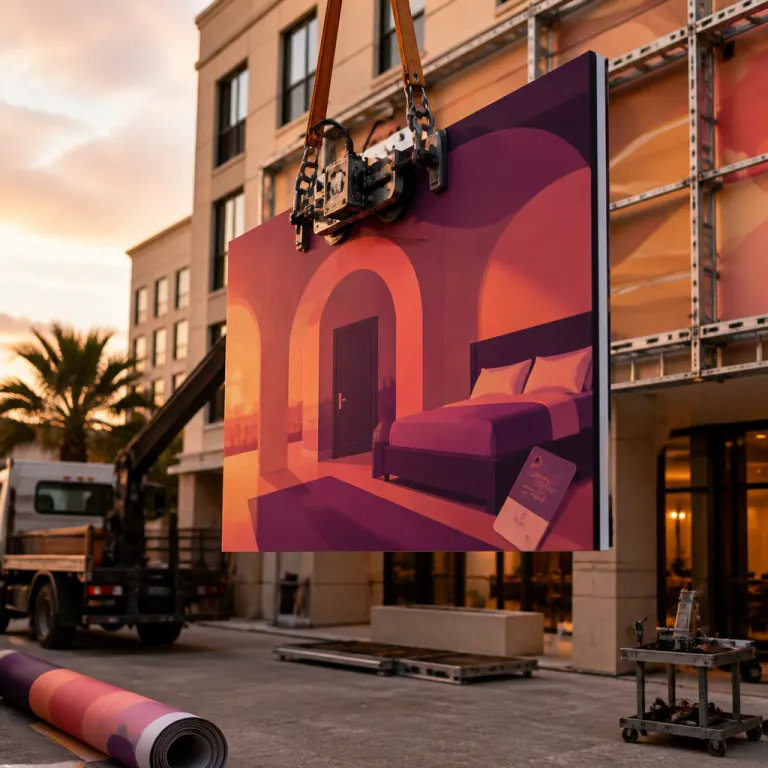
Why billboard design trends for property management companies matter to hospitality institutions
Hospitality institutions increasingly monitor billboard design trends for property management companies because these formats shape how guests perceive destinations. When a billboard for real estate or a hotel residence uses a clear message and minimalist design, it sets expectations for service quality long before a traveller checks in. For public institutions and tourism clusters, this outdoor advertising ecosystem becomes a strategic lever to align territorial branding, visitor flows, and long term investment narratives.
Property management companies operate at the crossroads of homes, extended stay apartments, and mixed use hospitality assets, so their billboards quietly define what “local living” means in a city. When an estate agency or a branded residence operator runs an effective billboard campaign, it does more than buy and sell exposure for units; it signals confidence in the neighbourhood and reassures potential buyers and long stay guests about safety, amenities, and mobility. For institutional investors, these high impact visual cues help validate urban regeneration strategies and support underwriting assumptions about demand.
Design agencies and advertising firms now treat each billboard as a piece of institutional storytelling, not just a sales tool for one estate agent or one building. A single eye catching billboard creative that highlights real services, a human agent photo, and a simple phone number can shift perceptions of an entire district in under five seconds, which aligns with typical roadside viewing windows reported by the Outdoor Advertising Association of America (OAAA). In one OAAA and Nielsen study, around 71% of drivers said they “often” notice roadside billboards, illustrating how quickly a strong visual can influence sentiment. When hospitality federations and hotel networks coordinate with real estate actors on such outdoor campaigns, they set business conditions that differentiate their destination and place their business apart from competing regions.
Minimalist layouts and institutional clarity in billboard design
Minimalist billboard design has become the dominant language for property management companies that want to speak clearly to potential buyers and long stay guests. The six word rule in billboard design states: "Keep main message under six words for clarity." For public institutions and professional federations, this discipline in outdoor advertising mirrors the need for concise policy communication and transparent governance.
On a typical billboard, a property management agency now prioritises one strong message, one recognisable brand logo, and one direct call to action, usually a phone number or a short URL. These billboards avoid cluttered photos of multiple homes and instead feature a single real estate asset or a lifestyle scene that reflects the local community, which helps potential buyers connect emotionally in a few seconds. When hotel clusters align their own signage and wayfinding with these minimalist design principles, they create a coherent visual grammar across stations, airports, and urban gateways.
Data driven institutions increasingly evaluate billboard design trends for property management companies using the same rigour they apply to hotel data architecture and single source of truth initiatives. A region that already works on a robust hotel data architecture that unlocks every other priority can extend that logic to outdoor media, tracking which billboard creative variants generate more qualified leads for both real estate and hospitality partners. In practice, this can mean A/B testing two versions of a property billboard—one with a lifestyle image, one with a building shot—and comparing enquiry volumes by phone and web. This shared measurement framework allows tourism alliances and investors to compare the ROI of billboard advertising against digital channels, while still respecting the unique strengths of outdoor formats.
Digital billboards, programmatic DOOH, and hospitality network intelligence
The rapid rise of the digital billboard is reshaping how property management companies and hotel networks coordinate their visibility strategies. Digital billboards allow dynamic content updates and interactivity, which means a single screen can promote homes for sale in the morning, extended stay services at midday, and weekend city break offers in the evening. For institutional investors and tourism clusters, this flexibility turns outdoor advertising into a live data surface that reflects demand patterns in near real time.
Programmatic digital out of home (DOOH), the automated buying of digital out of home inventory, lets an estate agency or a branded residence operator trigger a billboard campaign only when specific audience criteria are met. A hotel group can synchronise its billboard creative with social media pushes, while a property management business can show an agent photo and a local phone number only during commuting peaks, when potential buyers are most attentive. This convergence of digital billboard technology and institutional strategy requires robust evaluation frameworks similar to those used when assessing complex hotel technology providers and their APIs.
Hospitality institutions that already analyse how product features reshape institutional strategies in the hotel ecosystem can apply the same institutional intelligence to outdoor media partnerships. By treating each digital billboard as a programmable asset, public authorities and federations can negotiate shared slots where real estate services, tourism experiences, and civic messages coexist in a coherent narrative. JCDecaux, for example, has reported double digit annual growth in digital out of home revenues in several major markets, underlining how quickly programmable screens are becoming standard. This approach turns billboard design trends for property management companies into a laboratory for cross sector collaboration, where doing a great job on creative execution directly supports long term place making goals.
From property billboards to destination branding for hospitality ecosystems
Property management billboards rarely operate in isolation; they sit inside a wider visual field that includes hotel signage, airport displays, and city wayfinding. When an estate agent promotes homes near a new convention centre, the billboard creative inevitably influences how event planners and business travellers perceive that micro destination. Public institutions that coordinate zoning, transport, and tourism promotion therefore have a direct interest in how billboard design trends for property management companies evolve.
In regenerated districts, a sequence of billboards that highlight real estate projects, co living services, and boutique hotels can quietly narrate the story of a neighbourhood’s rebirth. A carefully staged billboard campaign might start with a high impact outdoor advertising panel announcing new cultural venues, then follow with design executions that show real residents enjoying local cafés and waterfront promenades. When these visuals integrate subtle references to sustainable mobility and public spaces, they reinforce policy objectives while still helping agencies buy and sell inventory efficiently.
Destination management organisations can work with design agencies to ensure that every billboard design featuring property assets also respects the territory’s brand platform. That means aligning colour palettes, typography, and even the tone of the message so that a single billboard advertising a residential tower does not clash with the city’s hospitality positioning. Over time, this shared discipline across billboards, hotel campaigns, and social media content helps set business expectations for investors and signals that the local ecosystem operates as a coordinated, investment grade cluster.
Creative standards, measurement, and governance for institutional stakeholders
For public institutions and professional federations, the question is not whether billboard advertising works, but how to govern its quality and alignment with public interest. Industry research from organisations such as the OAAA and Nielsen consistently shows that roadside billboards are noticed within a viewing window of just a few seconds, so an effective billboard must deliver a clear message, a legible phone number, and a recognisable brand in that tiny span. In one Nielsen out of home study, nearly half of respondents said they visited a website after seeing an outdoor ad, which underlines why clarity and recall matter. This constraint pushes agencies and property managers to adopt rigorous creative standards that can also inspire hospitality communication guidelines.
High contrast colours enhance readability from a distance, which is why many billboard executions for real estate and hotels now favour bold backgrounds with minimal text. When a billboard shows an agent photo, a simple promise such as “buy and sell with confidence”, and a direct call to action, potential buyers can process the offer while driving at urban speeds. Hospitality clusters can extend these principles to wayfinding and safety signage, ensuring that critical information for guests is just as eye catching and legible as commercial messages.
Governance frameworks should also address the environmental and social dimensions of outdoor advertising, especially as digital billboards and LED technology expand. Institutions can encourage eco friendly materials for static billboards, set business rules for light pollution, and require that a share of billboard creative inventory be reserved for civic campaigns that support tourism resilience. A practical example comes from several European cities that reserve a fixed percentage of municipal billboard space for cultural events and public information, demonstrating how commercial visibility and civic value can coexist. By integrating billboard design trends for property management companies into broader urban communication policies, public authorities ensure that commercial visibility also contributes to social cohesion and long term destination value.
Practical guidelines for hospitality and real estate collaborations on billboards
When hotel networks, property managers, and public institutions collaborate on billboards, they should start with a shared brief that clarifies objectives and audiences. For mixed use projects that combine homes, serviced apartments, and hotel rooms, the billboard design needs to speak both to potential buyers and to future guests without diluting the message. A simple structure works best: one main benefit, one visual focus, and one clear action such as calling a phone number or visiting a short URL.
Creative execution should reflect real local life rather than generic stock imagery, especially when promoting neighbourhoods that rely on tourism and hospitality jobs. A billboard that shows a real estate agent interacting with residents at a local market, or a family enjoying nearby cultural venues, will feel more authentic than a glossy skyline photo. Institutions can encourage agencies to highlight public transport access, green spaces, and cultural assets in their billboard creative, subtly reinforcing policy priorities while still doing a great job for the advertiser.
Finally, measurement must be shared across partners, with clear KPIs that go beyond immediate sales for one estate agency or one hotel. Tourism clusters can track how coordinated billboard campaigns affect web searches, social media engagement, and visitation patterns, comparing corridors with and without high impact outdoor advertising. Over time, this evidence base will help institutional investors and public authorities decide where to prioritise new billboard inventory, which formats of billboard design perform best, and how to keep the business apart from less coordinated destinations that underuse this powerful medium.
Key figures on billboard design trends for property management companies
- Typical billboard visibility time is around a few seconds according to industry analyses from the Outdoor Advertising Association of America and Nielsen, which means messages for real estate and hospitality must be extremely concise to be effective.
- Digital billboard usage has increased significantly in recent years in major markets, reflecting a strong shift toward dynamic outdoor advertising formats that benefit both property managers and hotel operators.
- Minimalist layouts and high contrast colours have become standard practice in billboard design for property management companies, because they significantly improve readability at typical urban driving speeds.
- Regions that coordinate billboard campaigns between property management companies and hospitality actors often report higher client acquisition rates, as consistent visual narratives strengthen both destination branding and real estate demand.
FAQ about billboard design trends for property management companies
What is the six word rule in billboard design for property managers?
The six word rule in billboard design states: "Keep main message under six words for clarity." Property management companies and hospitality brands use this rule to ensure that potential buyers and guests can understand the offer within the short visibility window typical for roadside billboards.
Why are high contrast colours so common on real estate billboards?
High contrast colours enhance readability from a distance, which is critical when drivers or pedestrians have only a few seconds to process a billboard. Estate agents and hotel operators rely on this principle so that their brand name, key message, and phone number remain legible in varied light and weather conditions.
How do digital billboards benefit property management and hospitality institutions?
Digital billboards allow dynamic content updates and interactivity, enabling property managers and hotel groups to adjust messages by time of day, audience profile, or occupancy levels. Institutions can use this flexibility to coordinate campaigns that promote both real estate projects and tourism experiences in a single, programmable outdoor advertising network.
What role can public institutions play in billboard design standards?
Public institutions can set guidelines on creative quality, environmental impact, and alignment with destination branding, ensuring that billboards support both commercial goals and public interest. By coordinating with professional federations, hotel networks, and property management agencies, they can turn billboard corridors into coherent narratives that strengthen the territory’s attractiveness.
How should hospitality clusters measure the impact of billboard campaigns?
Hospitality clusters should combine traffic and audience data with indicators such as website visits, enquiry volumes, and booking trends in areas exposed to billboards. Comparing these metrics with control zones that lack outdoor advertising helps institutions evaluate which billboard design trends for property management companies deliver the strongest return on investment.
References
- Outdoor Advertising Association of America (OAAA), industry data on billboard effectiveness and viewing behaviour.
- Nielsen, research on out of home advertising reach, recall, and impact on consumer actions.
- JCDecaux and Clear Channel, market insights on the growth of digital out of home and best practices for creative design.