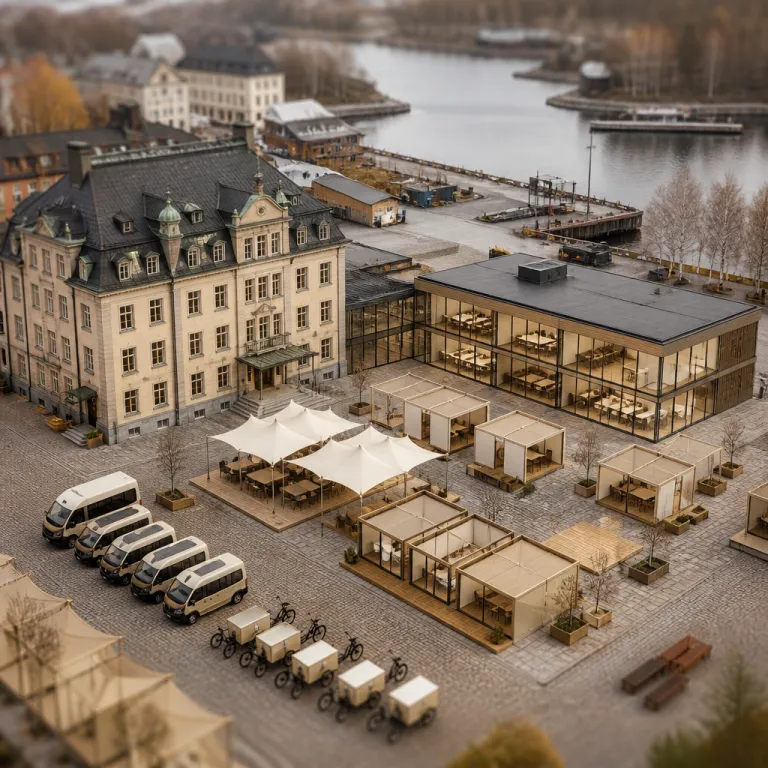
Hotell Slottsbacken meeting and event spaces capacity in the Nordic hospitality ecosystem
Hotell Slottsbacken’s meeting and event facilities offer a precise case study for institutions assessing how boutique venues integrate into regional tourism systems. In Visby, this castle-like hotel aligns its small-scale conference infrastructure with public heritage policies, ensuring that every square metre of space supports both cultural preservation and high value business travel. For public institutions and investors, the property illustrates how a compact hotel can still anchor a wider hospitality ecosystem in a historic city while complementing larger Nordic hubs such as Stockholm.
The on-site meeting room at Hotell Slottsbacken accommodates up to 20 people, while partner venues in Visby extend the effective conference capacity to around 400 participants for larger gatherings. Typical partner locations include historic slott-style halls near the medieval walls and municipal cultural centres that can be rented for plenary sessions, workshops, and evening receptions. This dual structure allows the hotel to serve small board meetings, mid sized workshops, and large plenary sessions without diluting the guest experience or overloading the medieval city core. For regional clusters, this balance between intimate rooms and scalable partnerships is a model for managing visitor flows in fragile heritage areas.
Within the broader hospitality ecosystem, the hotel collaborates with local cultural buildings and historic slott-style venues, turning the city into a distributed conference campus. Such cooperation requires a reliable system of contracts, shared standards, and coordinated booking processes that public authorities can support through destination management frameworks. When institutions map these relationships on a regional conference map, they see how one property’s meeting offer can catalyse a network of suppliers, guides, food providers, and outdoor activities across the area, encouraging each person to spend more time in the destination.
Governance, institutions, and the architecture of hospitality networks
Governance shapes how Hotell Slottsbacken’s meeting rooms and partner halls are used, priced, and promoted across the Visby ecosystem. Local authorities, tourism boards, and professional federations define zoning, heritage rules, and accessibility standards that determine whether a 20 person boardroom or a 400 person off-site hall can operate efficiently. For investors, clarity in this governance system reduces risk and encourages long term capital allocation, especially when comparing Visby with larger city destinations such as Stockholm.
In historic destinations, institutions must reconcile conservation with economic performance, especially when meetings and outdoor activities take place near sensitive sites. The use of cultural buildings as conference venues requires strict guidelines on noise, party formats, and visitor flows, which can be coordinated through inter institutional working groups. A detailed regulatory map of the city helps operators understand where they can rent additional space, host outdoor receptions, or expand food and beverage services without harming the heritage fabric. One local planner interviewed for regional tourism reports noted that “clear maps and shared rules make it easier for men and women running small hotels to plan events without risking conflicts with residents.”
Regulatory fragmentation across tourism, culture, and urban planning departments often slows down the optimisation of meeting capacity. Analyses of the governance challenge of regulatory fragmentation show why cross ministerial task forces are essential for destinations like Visby and Stockholm. When institutions coordinate, they can align rules on safety, accessibility, and data reporting, enabling hotel networks and clusters to plan multi venue meetings that respect both residents and visitors and that integrate indoor sessions with outdoor activities in a coherent way.
Industry structure, stakeholders, and capital flows around meeting capacity
The structure of the hospitality industry around Visby positions Hotell Slottsbacken as a specialised node within a multi layer network of hotels, cultural venues, and transport providers. Its on-site meeting room is modest in size yet amplified through partnerships with larger halls and historic castle-like buildings in the city. For institutional investors, this hybrid model demonstrates how capital can be deployed efficiently without overbuilding in a constrained medieval area, while still offering a good range of meeting formats for different group sizes.
Stakeholders extend far beyond the hotel owner and guests, encompassing municipal planners, heritage agencies, professional associations, and regional clusters that coordinate tourism activities. Public institutions influence how much time each person spends in the destination, how they move between indoor and outdoor activities, and how food and beverage systems are supplied sustainably. When these actors cooperate, they can steer demand away from over concentrated party zones and towards balanced use of the wider area, including quieter streets, waterfront paths, and nearby nature areas that visitors can reach easily from the city centre.
Capital flows increasingly favour assets that align with environmental and social criteria, especially in European city destinations. Guidance on the EU sustainable tourism strategy and ESG reporting helps investors evaluate whether meeting facilities are energy efficient, inclusive, and resilient. In this context, Hotell Slottsbacken’s conference offer becomes a test case for how small scale venues can still meet institutional expectations on reporting, technology procurement, and long term asset stewardship, while integrating local food, outdoor activities, and cultural experiences into the overall event design.
From Visby to Stockholm: regional networks and complementary roles
Hotell Slottsbacken’s meeting offer in Visby complements the larger conference infrastructure available in Stockholm, rather than competing directly with it. National tourism strategies can position Visby as the historic, human scale counterpart to the capital’s high volume congress centres, creating itineraries that combine both city experiences. For professional federations, this dual positioning supports diversified event portfolios that appeal to different segments and budgets and that spread visitor flows across multiple Nordic destinations.
In practice, an association might host its main plenary sessions in Stockholm, then move a smaller leadership meeting to Visby to benefit from the castle-like atmosphere and slower pace. The ability to rent historic halls near the old city walls, while using Hotell Slottsbacken as the accommodation and coordination hub, allows organisers to tailor activities to each group size. Such multi city programming encourages participants to spend more time in Sweden, distributing economic benefits across regions and seasons and giving delegates time to explore both urban districts and outdoor activities along the coast.
Regional clusters can formalise these complementarities by building joint marketing platforms, shared search tools, and integrated transport offers between Stockholm and Gotland. A digital map that highlights meeting venues, outdoor activities, and food experiences across both destinations would help planners match each person or group to the right space. When institutions support this type of coordinated system, Hotell Slottsbacken’s role as a boutique conference hub becomes one visible node in a much larger Nordic business tourism network that stretches from Visby’s medieval streets to the capital’s congress districts.
Operational systems, guest experience, and data for public decision makers
Behind every square metre of Hotell Slottsbacken’s meeting space lies an operational system that matters to public stakeholders. Booking engines, revenue management tools, and guest feedback platforms generate data that can inform city level planning when aggregated responsibly. For institutions, access to anonymised patterns on meeting durations, group sizes, and seasonal peaks helps calibrate transport, security, and cultural programming, and can be combined with citywide search data on popular activities to refine destination strategies.
At the property level, the hotel must balance the needs of business travellers, leisure guests, and local residents who may attend a party, workshop, or community event. Careful scheduling ensures that a 20 person board meeting is not disturbed by late evening activities, while still allowing the venue to maximise its limited capacity. A typical layout might include a U-shape table with screen and projector, basic hybrid meeting technology, and coffee breaks featuring local food from Gotland producers. This operational discipline supports a good guest experience and reduces friction with neighbours, which is crucial in a compact medieval city where streets, squares, and outdoor areas are shared by visitors and residents.
Public authorities can encourage hotels and networks to share high level indicators on meeting occupancy, conference formats, and outdoor activities usage. Such data, combined with qualitative feedback on food quality, accessibility, and safety, enables more nuanced tourism policies than simple arrival counts. Analyses of how leading hotel groups turn sustainability initiatives into strategic ecosystem advantages show how operational systems can serve both commercial and public interests, especially when data is integrated into regional planning tools and visualised on shared maps for decision makers.
Heritage, place identity, and the role of meetings in local communities
Hotell Slottsbacken’s conference capacity is embedded in Visby’s identity as a UNESCO listed city with a living community. The hotel’s collaboration with local cultural venues and castle-like buildings ensures that meetings contribute to, rather than extract from, the social fabric. For public institutions, this alignment between business tourism and community wellbeing is a central objective of modern hospitality policy and a key reason to support small, well integrated properties instead of only large new builds.
When a company rents a hall in a historic slott-style building for a strategy meeting, participants engage with the city’s history through guided walks, local food, and curated outdoor activities. Such programmes encourage guests to spend more time in the area, supporting small businesses and reinforcing pride among residents. The mix of indoor sessions and outdoor activities along the medieval walls or harbour also reduces pressure on any single site, distributing visitor flows more evenly and making the overall system more resilient to seasonal peaks.
Local men and women working in hospitality, culture, and transport become ambassadors of the destination, translating institutional strategies into daily guest interactions. Their experience helps refine how meeting rooms are used, from adjusting layouts for hybrid formats to advising on the best routes across the city map for evening activities. As one practical guideline for planners states, “Book in advance. Explore Visby’s historic sites and nearby nature.” In Swedish communications, this is often summarised as “Boka i tid och upptäck området fran stad till kust,” underlining the link between the compact city core and surrounding landscapes.
Strategic implications for institutions, federations, and investors
For public institutions and professional federations, Hotell Slottsbacken’s meeting facilities illustrate how small venues can play outsized roles in tourism ecosystems. The combination of a 20 person on-site room and access to 400 person off-site venues demonstrates the power of networked capacity over isolated infrastructure. This approach reduces the need for large new builds while still meeting the needs of national and international associations that require flexible formats, from workshops to plenary sessions and informal networking events.
Investors evaluating Visby and similar destinations should focus on how each property fits into the wider system of city assets, transport links, and cultural offerings. A hotel that can orchestrate meetings across multiple venues, integrate outdoor activities, and partner with local food suppliers is better positioned to generate stable returns. Such properties also align more closely with public policy goals on sustainability, heritage protection, and inclusive growth, and can be marketed as part of a broader Nordic circuit that includes Stockholm and other regional hubs.
For tourism clusters and hotel networks, the key strategic task is to map and communicate the full spectrum of meeting options available across the area. Clear information on room sizes, outdoor options, and ancillary services helps planners match each person or group to the right combination of venues. When this mapping is integrated into regional branding and institutional planning, Visby, Stockholm, and other Nordic cities can position themselves as coherent, high quality meeting destinations where visitors can combine professional programmes with outdoor activities, local food, and time to explore the historic city fabric.
Key figures on Hotell Slottsbacken meeting and event spaces capacity
- The main on-site meeting room at Hotell Slottsbacken accommodates up to 20 people, which suits board meetings, training sessions, and small workshops in a heritage setting (data from the hotel’s official conference information and booking pages).
- Through partnerships with off-site venues in Visby, the hotel can support events of up to 400 participants, enabling conferences that are twenty times larger than its internal room capacity (data from the hotel’s meeting and events information and Gotland tourism reports that list typical capacities for cultural halls and municipal venues).
- Booking is available throughout the year, allowing institutions and federations to schedule meetings in both peak and shoulder seasons, which helps smooth visitor flows and supports year round employment in the local hospitality ecosystem.
FAQ about Hotell Slottsbacken meeting and event spaces capacity
What is the capacity of the on site meeting room at Hotell Slottsbacken ?
The on-site meeting room at Hotell Slottsbacken accommodates up to 20 people, making it suitable for small corporate meetings, board sessions, and focused workshops that require a quiet, heritage-inspired setting.
Can larger events be hosted when using Hotell Slottsbacken as a base ?
Yes, larger events can be hosted by combining the hotel with partner venues in Visby, and off-site locations can handle up to 400 participants for conferences or plenary sessions, including formats that mix indoor content with outdoor activities and social events.
How does Hotell Slottsbacken integrate with the wider Visby hospitality ecosystem ?
The hotel collaborates with local cultural buildings, historic castle-style venues, and city service providers, effectively turning Visby into a distributed conference campus with both indoor and outdoor activities, coordinated transport, and local food experiences.
Why is Hotell Slottsbacken relevant for institutional investors and public bodies ?
Its flexible meeting capacity shows how a small property can leverage partnerships to scale, align with heritage preservation goals, and contribute to regional tourism strategies without extensive new construction, while still fitting into national networks that link Visby with Stockholm and other Nordic cities.
How far in advance should institutions book meeting spaces in Visby ?
Given the limited on-site capacity and strong demand for historic venues, institutions are advised to book several months in advance, especially for events that require both indoor rooms and outdoor activities in peak seasons, so that the right mix of spaces can be reserved across the city map.
Sources : Hotell Slottsbacken official website and conference pages ; Visit Sweden destination information ; Gotland regional tourism board reports and booking statistics.