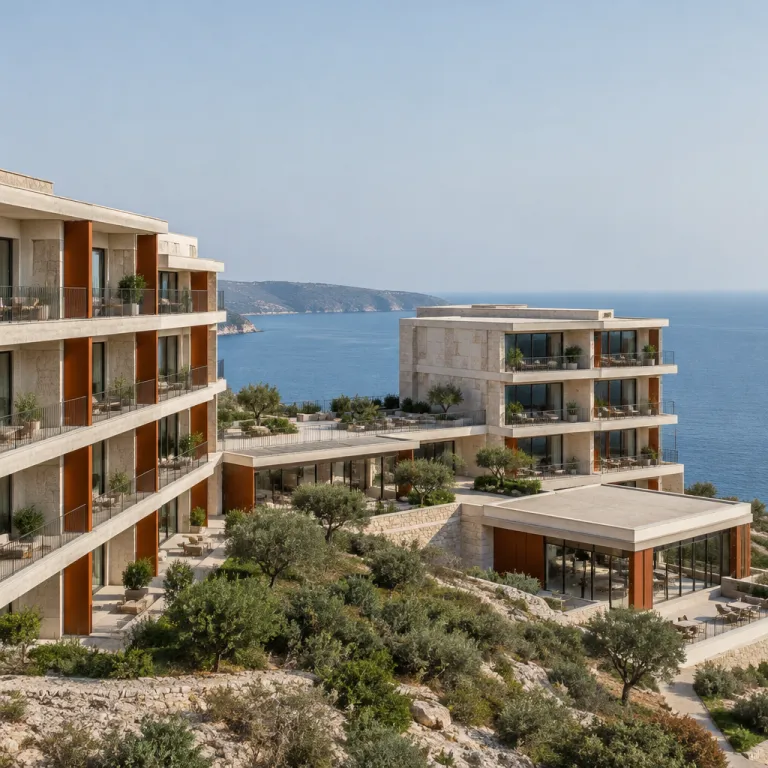
Mediterranean branded residences as a new pillar of hotel networks
Mediterranean branded residences have shifted from niche real estate products to a structural pillar of hotel networks, reshaping how resort tourism, institutional capital and long term luxury living intersect along the Euro-Mediterranean coast. In destinations from Spain to Turkey, these branded residential schemes now operate as mixed-use hospitality platforms that influence local planning choices, infrastructure investment and tourism policy in ways comparable to large resort hotels.
A branded residence is generally defined as a luxury home sold under a recognised brand with a brand license, service obligations and design standards. This definition matters for hotel groups and consortia, because the same hotel brand that operates a resort or city hotel also curates the residence building, the amenities and the guest-owner experience. The result is a hybrid asset class where residence owners enjoy hotel-grade services and professional management while the hotel operator extends its brand reach, fee base and customer lifetime value.
Across Spain, France, Greece, Italy, Turkey and Portugal, the Mediterranean branded residence pipeline is accelerating, with Savills reporting more than thirty two pipeline projects in Spain alone in its 2023 branded residences spotlight (Savills, 2023, global branded residences review; figures refer to identified schemes as of mid‑2023). Resort locations dominate, with around seventy three percent of Euro-Mediterranean branded residence schemes positioned in resort environments rather than dense urban cores (Savills, 2023, Euro-Mediterranean sample). For tourism clusters and regional development agencies, this resort bias raises questions about coastal carrying capacity, public beach access, mobility systems and the balance between hotel keys, villa products and permanent residence stock.
How consortia and data infrastructure can support branded residence ecosystems
Hotel networks and consortia that embrace branded residences in Mediterranean destinations must rethink their data, connectivity and governance architecture. A residence owner expects the same seamless booking, service and billing experience as a hotel guest, which means that the residence management platform, the hotel Property Management System and the wider distribution stack must be tightly integrated. For institutional investors, the quality of this digital backbone directly affects operating margins, resale values and long term risk-adjusted returns.
When a branded residence is co-located with a hotel, every interaction from spa reservations to villa housekeeping requests generates data that should feed a unified real estate and hospitality profile. This is where a robust hotel API connectivity layer becomes strategic, because it allows residence units to be distributed in rental programmes, serviced by hotel teams and reported to asset managers with consistent KPIs. Without such integration, Mediterranean branded residence projects risk becoming operational silos that dilute the brand, fragment guest journeys and underperform financially.
Public institutions and tourism clusters can encourage common standards by promoting shared data models and open API frameworks in regional tourism strategies. A technical reference such as a modern hotel API connectivity explained guide shows how integration layers can power multi-brand, multi-building ecosystems at scale while respecting privacy rules. For professional federations, supporting training on data governance, cybersecurity and privacy for residence owners and hotel operators will be as important as traditional marketing alliances or sales roadshows.
Partnership architectures between developers, brands and institutions
The governance of Mediterranean branded residences rests on a three-actor partnership between the developer, the hospitality brand and the residence owner. The developer acts as builder and licensor, partnering with the brand and constructing each residence building under strict brand standards that cover design, amenities, sustainability and digital infrastructure. The hospitality brand licenses its name, provides design guidance and often operates the hotel and residence services under a management contract or long term service agreements.
Residence owners, who are usually high net worth individuals or institutional buyers, purchase individual units or villa products and pay ongoing fees in exchange for hotel-grade services and access to amenities. For institutional investors, the clarity of these contracts and the alignment of incentives between the developer, the brand and the residence owners determine the long term stability of cash flows. Public authorities and professional federations can play a moderating role by issuing guidelines on consumer protection, transparency of fees and governance of owners’ associations in branded residence schemes.
As hotel groups, design brands and non-hotel lifestyle brands enter the Mediterranean branded residences market, partnership architecture becomes more complex and more strategic. A framework such as a partnership architecture in hospitality reference can help institutions evaluate whether revenue sharing, branding fees and operational responsibilities are balanced for all parties. For tourism clusters, promoting model contracts, mediation mechanisms and disclosure standards can reduce conflicts between residence owners and hotel operators, which protects the reputation of the wider destination.
Global benchmarks from Miami and Dubai for Mediterranean clusters
To understand the trajectory of Mediterranean branded residence projects, many institutional investors and hotel networks look at mature markets such as Miami and Dubai. In Miami, the evolution from early branded towers in Brickell in the early 2000s to ultra-luxury living concepts in Miami Beach, Bal Harbour, Sunny Isles and Palm Beach shows how a city can integrate branded residence high-rises into its urban and beachfront fabric. These residences in Florida have created a dense ecosystem of real estate brokers, legal specialists and hotel brand teams that Mediterranean clusters can study carefully.
Projects such as Baccarat Residences in Brickell, Bentley-branded residence concepts and various Ritz-Carlton branded residences in Bal Harbour and other districts illustrate how a strong brand can reposition entire neighbourhoods. In these Miami schemes, the combination of striking design, curated amenities and hotel-style service has allowed developers to command a price premium of roughly twenty to thirty percent compared with non-branded residence buildings nearby, according to Savills and Knight Frank transaction analysis (Savills, 2023, and Knight Frank, 2023, global branded residences datasets; premiums refer to like-for-like comparisons within selected submarkets). For Mediterranean destinations, the lesson is that brand selection, architectural quality and integration with public spaces matter more than simply adding luxury labels.
Dubai and the wider United Arab Emirates offer another benchmark, where branded residences linked to top hotel brands and design houses have multiplied along Dubai Marina, Palm Jumeirah and other coastal areas. In Dubai, the co-location of hotel towers, branded residences and retail promenades has created mixed-use districts that operate almost as private resort cities. A 2022 Savills review estimated that Dubai hosted more than forty branded residence schemes, with Palm Jumeirah alone concentrating a significant share of ultra-prime units (Savills, 2022, Dubai and UAE branded residences overview; figures cover completed and pipeline schemes identified by the firm). Mediterranean public institutions must evaluate how far they wish to emulate this model, balancing private luxury living with public beach access, mobility infrastructure and environmental safeguards.
Risk management, regulation and public value creation
For public institutions, the rise of Mediterranean branded residence projects raises regulatory questions that go beyond traditional hotel licensing. A branded residence often blurs the line between residential real estate, hotel accommodation and tourist rentals, which can complicate zoning, taxation and consumer protection frameworks. Clear definitions of residence use, rental programmes and hotel service obligations are essential to avoid legal disputes, reputational damage and community backlash.
Professional federations and hotel consortia can support regulators by providing data on occupancy patterns, fee structures and resale performance across different branded residence schemes. Market reports already show that branded residences tend to command a price premium over comparable non-branded units, because the brand adds value through services, amenities and resale confidence (Savills, 2023, and Knight Frank, 2023, global branded residences samples). When regulators understand these dynamics, they can design fiscal and planning policies that capture part of the uplift for public infrastructure while keeping the investment case attractive for long term capital.
One verified insight from market analysis is that strong growth in Spain and Turkey pipelines is accompanied by a clear resort bias, with hotel brands dominating but non-hotel brands entering and resorts representing around seventy three percent of Mediterranean projects (Savills, 2023, Euro-Mediterranean branded residences breakdown). This pattern suggests that coastal communities will carry most of the environmental and social impacts of branded residence expansion. Public institutions should therefore link approvals for new residence buildings to measurable commitments on coastal protection, mobility, workforce housing and integration with local SMEs.
Operational excellence, data layers and long term asset performance
Once a branded residence opens, operational excellence becomes the main driver of both guest satisfaction and financial performance. Residence owners expect consistent hotel-style service in their bedrooms, shared spaces and villa facilities, while hotel guests using the same beach club or spa expect seamless access regardless of whether they stay in the hotel or in a residence unit. This dual expectation requires carefully designed staffing models, service level agreements and digital workflows that connect every building and every residence to the central operations hub.
For institutional investors and hotel networks, the real differentiator is often the quality of the real time data layer that feeds pricing engines, rental programmes and asset management dashboards. A reference on designing the real time data layer that feeds OTAs and AI agents shows how unified data flows can support both hotel and residence revenue streams without fragmenting inventory. When Mediterranean branded residence projects adopt such architectures, they can optimise rental yields, manage maintenance cycles and provide transparent reporting to owners, lenders and regulators.
Tourism clusters and professional federations can encourage this shift by promoting training on data literacy, ESG reporting and long term asset stewardship for residence managers and hotel operators. In one Spanish coastal resort that opened a branded residence complex in 2016, the introduction of a unified data platform and dynamic rental pricing reportedly increased net operating income by more than fifteen percent over four years while reducing energy use per occupied unit by around ten percent (internal operator reporting, 2016–2020, single-asset case study). Public institutions may also require periodic impact reports that combine financial KPIs with indicators on local employment, environmental performance and community engagement. In this way, each branded residence becomes not only a symbol of luxury living but also a measurable contributor to the resilience of the wider hospitality ecosystem.
Key figures shaping Mediterranean branded residence strategies
- Pipeline projects in Spain for branded residences have reached thirty two identified schemes according to Savills’ 2023 branded residences spotlight, signalling a critical mass that justifies dedicated regulatory and infrastructure planning (Savills, 2023, Spain-focused subset of its global branded residences database).
- Resort locations account for around seventy three percent of Euro-Mediterranean branded residence projects based on Savills analysis, which concentrates both opportunities and environmental pressures along the coastline (Savills, 2023, Euro-Mediterranean sample including Spain, France, Greece, Italy, Turkey and Portugal).
- The branded residence model typically commands a price premium over comparable non-branded real estate, because the brand license, hotel-grade services and design standards increase both initial sale prices and resale values (Savills, 2023, and Knight Frank, 2023, global branded residences benchmarks; premiums vary by city and segment).
- Early Mediterranean projects appeared around the turn of the century, but the most significant acceleration has taken place over the last decade, coinciding with stronger global demand for lifestyle-oriented, low maintenance luxury living (Savills, 2023, long-run timeline of branded residence launches in Europe and the Middle East).
Frequently asked questions about Mediterranean branded residences
What defines a branded residence in the Mediterranean context ?
A branded residence in the Mediterranean context is a luxury home sold under a recognised brand, usually a hotel or lifestyle brand, operating under a brand licensing agreement that imposes design standards and service obligations. Owners benefit from hotel-grade services, access to amenities and professional management, while the brand receives fees and extends its presence in key resort destinations. This structure differentiates branded residences from conventional second homes or unmanaged apartments.
Why are branded residences expanding so quickly along the Mediterranean coast ?
The Mediterranean offers a combination of climate, coastline, cultural appeal and established tourism infrastructure that attracts global luxury buyers. Hotel groups and developers use branded residences to monetise prime beachfront or resort land with a mix of hotel keys and saleable residence units, which improves project financing, speeds up presales and spreads development risk. Institutional investors are drawn by the perceived resilience of high end coastal real estate and the recurring fee income generated by residence management.
Do branded residences cost more than comparable non branded properties ?
Branded residences generally cost more than comparable non-branded properties in the same location, because buyers pay for the brand, the curated design, the amenities and the professional management. This premium is often justified by higher resale values and stronger rental performance when units participate in managed rental programmes. For institutional investors, the key question is whether the additional brand-related fees are offset by better long term occupancy, pricing power and liquidity at exit.
How should public institutions regulate branded residence projects ?
Public institutions should start by defining clear categories for branded residences within planning and tourism regulations, distinguishing them from pure residential and pure hotel assets. They can then set rules on rental activity, consumer protection, transparency of fees and contributions to local infrastructure and environmental mitigation. Coordinated dialogue with hotel federations, residence owner associations and developers helps ensure that regulation protects the public interest without undermining the investment case.
What role can hotel networks and consortia play in this ecosystem ?
Hotel networks and consortia can set quality benchmarks, share best practices on operations and data management, and negotiate collective solutions for training, technology and sustainability across multiple branded residence projects. By coordinating standards for service, design and ESG reporting, they help protect the reputation of the brands involved and the destinations that host these developments. Their advocacy with regulators and public institutions also ensures that the specificities of branded residences are understood in policy debates and long term destination strategies.