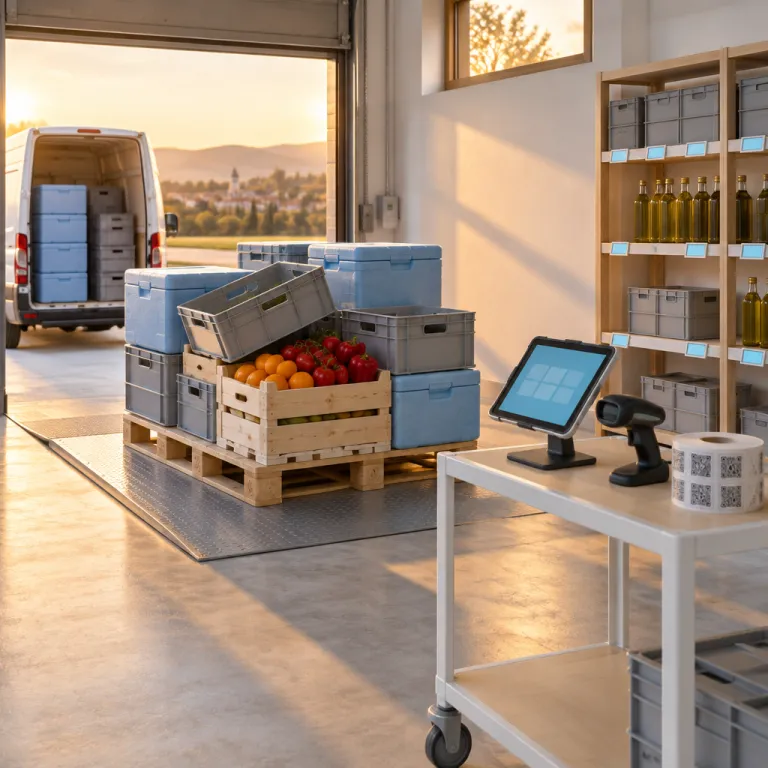
Mapping the hospitality ecosystem around food supply chain tech in Spain
Across Spain, the hospitality ecosystem is being reshaped by new food supply chain technology for hotels and restaurants with 10 to 300 employees. This transformation links public institutions, professional federations, hotel networks, tourism clusters, and institutional investors around a shared objective of higher food quality and better health outcomes for guests. For these stakeholders, the mid sized hospitality segment has become a strategic space where operational efficiency, sustainability, and territorial development converge.
Public authorities and each relevant department now treat food and water management in hospitality as part of a broader agenda that includes agriculture, climate resilience, and public health. Regional governments and the national department of agriculture increasingly view mid sized hotel groups as critical partners for testing digital practices that reduce food waste, monitor water use, and guarantee high quality standards from farm to table. This creates a wide range of collaboration formats, from early pilot projects in rural destinations such as La Rioja to long term procurement frameworks in major urban tourism hubs like Barcelona and Madrid.
For hotel networks operating in Spain with 10 to 300 employees per property, modern food supply systems are no longer a niche topic but a sign of operational maturity and institutional credibility. Digital traceability tools, temperature and water sensors, and supplier platforms are designed to meet strict regulatory requirements while giving individual hotels more control over time sensitive deliveries and stock levels. As these systems mature, they generate structured data that can feed into public development report processes, strengthening the authority of tourism clusters when they negotiate infrastructure or sustainability funding.
Public institutions and professional federations as system architects
Public institutions in Spain now act as system architects for the hospitality food supply chain ecosystem serving hotels with 10 to 300 staff. Ministries, regional councils, and municipal authorities coordinate with professional federations to align food, water, and health regulations with the digital capabilities of mid sized hotel operators. This coordination reduces fragmentation and gives investors clearer signals about long term policy stability and quality expectations, while avoiding duplicated audits and overlapping inspections for individual properties.
Professional federations and hotel associations translate regulatory changes into operational practices that individual hotels can implement in a realistic time frame. They often create shared digital platforms or framework agreements that are designed to meet the needs of properties with limited internal IT departments, while still supporting a wide range of suppliers from local agriculture cooperatives to national distributors. In this context, the mid market food and beverage technology segment benefits from collective bargaining power and from pooled training resources on topics such as food safety, water efficiency, and data reporting.
For these federations, alliance based technology strategies are now essential, because solo procurement rarely delivers the scale required for robust platforms. This is where the logic behind an alliance driven hospitality technology strategy becomes directly relevant to food supply chain systems. When federations and clusters act together, they can set common data standards, negotiate with department of agriculture officials as a unified authority, and ensure that both food and water monitoring tools are interoperable across different hotel networks. As one federation representative in Catalonia noted during a recent workshop, “no single hotel can move the market, but a coordinated cluster can change how suppliers and regulators behave in less than a season.”
Hotel networks, tourism clusters, and territorial value creation
Hotel networks with 10 to 300 employees per property sit at the operational core of Spain’s food logistics and sourcing ecosystem. Their purchasing decisions shape demand for local agriculture, influence logistics investments, and determine how quickly sustainable practices spread across destinations. Tourism clusters, which bring together hotels, restaurants, producers, and transport operators, provide the shared space where these decisions can be coordinated at territorial scale.
Within such clusters, digital food supply tools become a lever for building long term partnerships between hospitality groups and regional agriculture stakeholders. Platforms that track food origin, water use, and quality metrics allow hotels to sign multi year agreements with cooperatives, giving farmers more predictable income while helping hotels secure high quality seasonal products. Over time, this strengthens the development of local brands and gastronomic identities, which in turn attract higher value visitors and institutional investors interested in sustainable tourism assets.
Case studies from Spanish destinations show how coordinated ecosystems can set new benchmarks for hospitality performance. In the Basque Country, for example, a group of mid sized hotels in San Sebastián partnered with a traceability provider to monitor fish and vegetable sourcing, reporting a double digit reduction in food waste and higher guest satisfaction scores on menu quality. The narrative behind a new benchmark in the hospitality ecosystem illustrates how aligned incentives between operators, technology providers, and public authorities can accelerate innovation. When similar alignment is applied to food supply chain solutions for mid sized hotels, clusters can integrate health focused menus, reduced food waste, and transparent reporting into a single, coherent value proposition for both guests and investors.
Technology providers, procurement frameworks, and investor expectations
Technology providers serving the food and beverage supply chain of Spanish hotels with 10 to 300 employees must navigate a complex matrix of institutional expectations. Public buyers, federations, and hotel groups all require systems that are designed to meet strict food safety, water management, and data protection rules. At the same time, investors expect scalable platforms that can operate across a wide range of property sizes and regional contexts.
For institutional investors, the most attractive solutions are those that embed compliance by design and reduce operational risk over time. Platforms that integrate supplier vetting, digital sign off workflows, and automated development report generation allow hotel groups to demonstrate continuous adherence to health and quality standards. This reduces the burden on individual properties, whose internal department structures are often lean, and reassures authorities that regulatory changes can be implemented without compromising guest care or food safety.
To build resilient procurement strategies, many hospitality groups now look at frameworks that can survive vendor consolidation and regulatory shifts. Guidance on a technology procurement framework that survives vendor consolidation is particularly relevant when evaluating food supply and kitchen monitoring providers. Systems that manage both food and water data, integrate with department of agriculture databases, and support transparent quality reporting are better positioned to meet investor expectations for long term value creation. A mid sized coastal hotel group in Valencia, for instance, adopted an integrated kitchen monitoring platform and reported a measurable cut in food waste alongside lower water consumption per guest, which strengthened its ESG profile in discussions with long term investors.
Regulation, data, and the role of public authority
Regulation is the backbone of the digital food supply ecosystem for Spanish hotels, and public authority plays a central coordinating role. Spanish and European food and health regulations set the minimum standards for safety, traceability, and water quality in hospitality operations. Digital tools transform these regulatory requirements into real time practices, allowing hotels to move from reactive compliance to proactive risk management.
Data generated by connected kitchens, storage areas, and supplier platforms enables authorities to monitor trends without intrusive inspections. Aggregated indicators on food temperature, water consumption, and waste volumes can inform policy development and support targeted interventions where quality issues emerge early. For hotel groups, this data rich environment shortens the time between regulatory changes and operational implementation, because systems can be updated centrally rather than property by property.
Institutional stakeholders increasingly expect transparent reporting as a sign of governance maturity in hospitality portfolios. When hotel networks publish regular development reports that include food safety metrics, water efficiency indicators, and health related outcomes, they reinforce trust with regulators and investors. Over the long term, this transparency helps build a shared understanding of what high quality means in the context of technology enabled food supply management for hotels with 10 to 300 employees, and it anchors the ecosystem in measurable, verifiable practices rather than marketing claims.
Operational practices, human capital, and long term competitiveness
Operational practices inside hotels determine whether the potential of digital food supply tools for mid sized properties is fully realized. Even the most advanced systems for food and water monitoring depend on staff who understand why quality matters and how to act on alerts. Training programs supported by federations and tourism clusters help individual employees translate digital signals into concrete actions in kitchens, storage rooms, and service areas.
For properties with 10 to 300 employees, the internal department structure must balance specialization with flexibility. A dedicated food and beverage team can oversee supplier relationships, health and safety checks, and coordination with the department of agriculture, while line staff integrate these requirements into daily routines. Over time, this creates a culture of care where high quality food handling, responsible water use, and accurate reporting are seen as part of professional pride rather than external constraints.
Long term competitiveness in the Spanish hospitality ecosystem will depend on how quickly these practices become standard across regions and hotel categories. Institutional investors already factor environmental and social indicators into their decisions, and food supply chain performance is increasingly part of that assessment. When digital food and water management is embedded into building design, operational space planning, and staff development, it strengthens both short term efficiency and long term asset resilience.
Key statistics on food supply chain tech and hospitality in Spain
- According to the Spanish Ministry of Agriculture, Fisheries and Food, hospitality and food service account for roughly 14% of national food waste, which makes digital monitoring tools in kitchens and storage areas a high impact lever for waste reduction (MAPA, “Food Loss and Waste in Spain”, 2020, Ministerio de Agricultura, Pesca y Alimentación).
- Data from the Instituto Nacional de Estadística indicate that small and medium enterprises with 10 to 249 employees represent more than 99% of Spanish companies, which aligns closely with the focus on hotels employing between 10 and 300 people in the hospitality sector (INE, “Structural Business Statistics”, 2022, Instituto Nacional de Estadística).
- The European Food Safety Authority reports that over 40% of foodborne outbreaks in the European Union are linked to restaurants and catering, underlining why health and quality monitoring in hotel food operations is a priority for public authorities (EFSA, “EU One Health 2022 Zoonoses Report”, European Food Safety Authority).
- Studies by the World Resources Institute show that every euro invested in food waste reduction in hospitality can generate a return of up to 14 euros, which reinforces the financial case for institutional investors backing food supply chain technology in Spanish hotels (WRI, “The Business Case for Reducing Food Loss and Waste”, 2017, World Resources Institute).
- Research from the European Environment Agency highlights that tourism related water use can reach up to 400 litres per guest per day in some Mediterranean destinations, which makes integrated food and water management systems strategically important for Spanish coastal and island hotels (EEA, “Water Use in Europe”, 2021, European Environment Agency).
FAQ about food supply chain tech in the Spanish hospitality ecosystem
How does food supply chain tech benefit hotels with 10 to 300 employees in Spain ?
For Spanish hotels in the 10 to 300 employees range, food supply chain technology improves stock control, reduces waste, and strengthens compliance with food safety rules. Digital tools automate temperature checks, expiry tracking, and supplier documentation, which saves time for operational teams. These efficiencies translate into lower costs, more consistent quality, and better audit readiness for public authorities and investors.
What role do public institutions play in supporting these technologies ?
Public institutions set the regulatory framework for food safety, water quality, and health standards that hospitality operators must follow. They also provide funding, tax incentives, or pilot programs that encourage adoption of digital traceability and monitoring tools. By coordinating with professional federations and tourism clusters, authorities help ensure that solutions are designed to meet the needs of mid sized hotels rather than only large chains.
How can tourism clusters and hotel networks collaborate on food supply chain innovation ?
Tourism clusters and hotel networks can pool demand to negotiate better terms with technology providers and local producers. Joint platforms for ordering, traceability, and reporting allow multiple properties to share data and best practices on food and water management. This collaborative approach strengthens local agriculture linkages, supports regional branding, and makes it easier to meet high quality standards across an entire destination.
Why is water management linked to food supply chain tech in hospitality ?
Water is essential for food preparation, cleaning, and overall health standards in hotels and restaurants. Integrated systems that track both food and water use help operators identify inefficiencies, prevent contamination risks, and comply with environmental regulations. In water stressed Spanish regions, such integration is increasingly seen by investors and authorities as a sign of responsible long term asset management.
What should institutional investors look for when assessing food supply chain tech in hotel portfolios ?
Institutional investors should evaluate whether platforms are scalable across properties with 10 to 300 employees and whether they embed regulatory compliance by design. Key indicators include traceability coverage, integration with department of agriculture or health databases, and the quality of development reports generated for ESG disclosure. Investors also value evidence that staff training and operational practices align with the capabilities of the chosen technology.