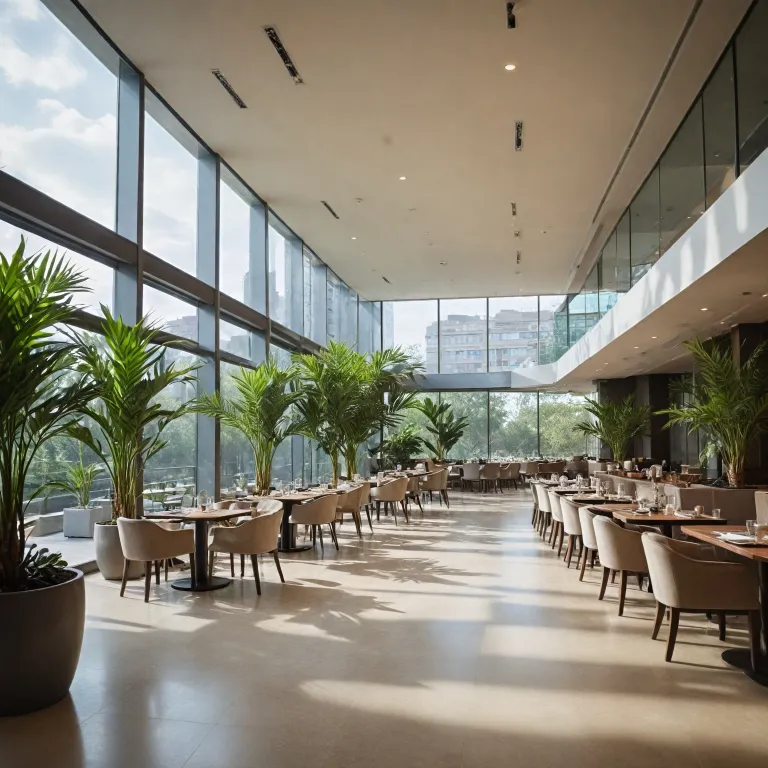
Why air quality is now a strategic pillar for hospitality institutions
Across the hospitality ecosystem, air quality has moved from technical detail to strategic priority. Public institutions and hotel federations now link the best air quality management solutions for hospitality industry directly with health policy, destination appeal, and long term asset value. For investors and clusters tourisme, clean indoor air is increasingly treated as core infrastructure rather than an optional amenity.
This shift is driven by dense foot traffic, enclosed guest rooms, and complex HVAC systems that can concentrate air pollution and persistent odors. When hotels fail to control indoor air quality, particulate matter and other pollutants undermine guest comfort, staff wellbeing, and regulatory compliance in public buildings. Conversely, hotels that maintain consistently good air and visibly communicate quality monitoring data are rewarded with stronger guest experience metrics and higher pricing power.
Recent consumer research underlines this institutional challenge and opportunity. “Percentage of consumers who recognize the importance of indoor air quality : 91 %”, “Percentage of consumers who want to see IAQ metrics in public buildings : 76 %”, and “Percentage of consumers who say hotel IAQ would impact their stay choice : 77 %”. For networks of hotels and branded clusters, these figures justify coordinated investment in air purifiers, smart sensor platforms, and energy efficient HVAC upgrades that scale across portfolios.
Mapping the ecosystem of providers and institutional stakeholders
The best air quality management solutions for hospitality industry emerge from a dense ecosystem of providers, regulators, and networked operators. Technology specialists such as illumiPure, HealthWay, Biozone Scientific, and Fellowes supply air purifiers, filters, and HVAC retrofit systems tailored to hotel rooms and high traffic public buildings. Their portfolios range from portable air purifier units for individual guest rooms to fully integrated solutions embedded in existing hvac systems.
Institutional actors shape how these tools are deployed and governed across hotels. Public authorities define indoor air quality thresholds, acceptable particulate matter levels, and transparency expectations for quality monitoring in lobbies, corridors, and meeting spaces. Professional federations and clusters tourisme then translate these frameworks into operational guidelines that help hotels select the best air purifiers, specify room size coverage, and interpret real time air quality data.
Hotel networks and asset managers sit at the operational center of this ecosystem. They arbitrate between capital expenditure on smart sensor grids, ongoing maintenance of filters, and the measurable uplift in guest comfort and sleep quality. When these networks coordinate procurement and data standards, they can benchmark indoor air performance across multiple hotels, identify outliers with poor air, and negotiate better terms with air purifier providers while preserving guest experience.
From equipment to strategy : designing portfolio wide air quality programs
For institutions publiques and investors, the question is no longer whether to invest in air quality but how to structure coherent programs. The best air quality management solutions for hospitality industry combine equipment, monitoring, and governance so that each hotel contributes to a consistent standard across the network. This requires moving beyond isolated purchases of purifiers or filters and towards integrated indoor air strategies.
At portfolio level, decision makers first segment assets by room size, building age, and existing hvac systems. Older public buildings and legacy hotels may need HVAC integrated air purifiers and targeted air pollution controls in guest rooms, while newer properties can focus on smart sensor deployment and fine tuning of energy efficient ventilation. In both cases, quality monitoring in real time becomes the backbone that links air, comfort, and operational performance.
Data from sensors tracking particulate matter, odors, and temperature is then aggregated at group level. This allows federations, clusters, and brand headquarters to compare clean air performance between hotels, correlate air quality with guest comfort scores, and prioritize capital for sites where indoor air consistently underperforms. Over time, such programs transform air purifier investments into measurable levers for guest experience, staff wellbeing, and long term asset resilience.
Smart monitoring, data transparency, and guest centric communication
Smart monitoring technologies are redefining what the best air quality management solutions for hospitality industry look like in practice. Systems such as the Fellowes Array platform, with EnviroSmart+ Technology, illustrate how a networked air purifier can adjust airflow and filtration based on real time sensor readings. When deployed across guest rooms and shared spaces, these smart devices maintain good air while optimizing energy efficient operation.
For institutions and hotel networks, the strategic value lies in the data. Continuous quality monitoring of indoor air, including particulate matter and volatile compounds, generates time series that can be audited, benchmarked, and shared with regulators. When hotels publish selected air quality metrics in lobbies or apps, they respond directly to rising expectations that IAQ in public buildings should be visible and verifiable.
Communication is now part of guest comfort and risk management. Clear signage explaining how air purifiers, filters, and hvac systems work together to maintain clean air reassures guests who are sensitive to pollution or odors. Many operators also brief staff so that every guest question about air quality, room size coverage, or purifier technology receives a confident, consistent answer that reinforces trust in the hotel and its wider network.
Operational integration : aligning air quality with energy, maintenance, and networks
Embedding the best air quality management solutions for hospitality industry into daily operations requires careful alignment with energy, maintenance, and staffing. Hotels must balance the pursuit of clean indoor air with energy efficient operation of hvac systems, especially in large properties and mixed use public buildings. Smart sensor controls and variable speed fans help maintain fresh air and good air quality without excessive energy consumption.
Maintenance teams become key actors in this ecosystem wide effort. They manage filter replacement schedules, calibrate monitoring devices, and ensure each air purifier continues to deliver the specified clean air delivery rate for the relevant room size. When networks of hotels standardize equipment and procedures, they simplify training, reduce downtime, and ensure that guest rooms consistently meet the same indoor air benchmarks.
Institutional investors and clusters tourisme can further support this integration through shared services. Centralized procurement of air purifiers, sensors, and filters reduces unit costs, while group level contracts with providers like illumiPure, HealthWay, or Biozone Scientific secure consistent service levels. For a deeper view of how collaborative platforms amplify these benefits, see this analysis on maximizing the benefits of hospitality industry networks for institutional growth and innovation, which aligns closely with air quality governance.
Financing, governance, and long term value for hospitality institutions
For institutional stakeholders, air quality initiatives must demonstrate clear value over time. The best air quality management solutions for hospitality industry therefore integrate financial modeling, risk mitigation, and brand positioning into a single governance framework. This allows hotel groups, public owners, and investors to treat indoor air projects as long term infrastructure rather than short lived operational experiments.
On the financial side, energy efficient air purifiers and optimized hvac systems can reduce operating costs while supporting higher occupancy and rate premiums linked to superior guest experience. When quality monitoring data shows sustained improvements in indoor air, institutions can also reference reduced complaints about odors, better sleep quality feedback, and fewer health related incidents among guests and staff. These outcomes strengthen the investment case for upgrading filters, sensors, and purification capacity across entire portfolios.
Governance structures then ensure consistency and accountability. Federations and clusters tourisme can define minimum indoor air standards, specify approved technologies for controlling particulate matter and air pollution, and require regular reporting from member hotels. Over time, such frameworks create a recognizable label of clean air and guest comfort that differentiates compliant hotels and public buildings, reinforcing trust in the broader hospitality ecosystem.
Key statistics on indoor air quality expectations in hospitality
- Percentage of consumers who recognize the importance of indoor air quality : 91 %.
- Percentage of consumers who want to see IAQ metrics in public buildings : 76 %.
- Percentage of consumers who say hotel IAQ would impact their stay choice : 77 %.
Essential questions institutions ask about air quality in hospitality
What are the benefits of air purification in hotels?
Air purification in hotels reduces airborne pathogens, improves guest comfort, and enhances overall health and safety. For institutions and networks, these benefits translate into stronger guest experience indicators and lower reputational risk. They also support compliance with evolving health regulations on indoor air quality.
How do air quality monitoring systems work in hospitality settings?
Air quality monitoring systems track pollutants and environmental metrics in real time, providing actionable insights for maintaining optimal air conditions. Sensors measure particulate matter, humidity, and other parameters in guest rooms and shared spaces. The resulting data helps operators adjust hvac systems, air purifiers, and ventilation to maintain consistently clean air.
Why is indoor air quality important in the hospitality industry?
Maintaining good indoor air quality is crucial for guest satisfaction, health, and compliance with health regulations. Poor air can aggravate allergies, disturb sleep, and generate complaints about odors or stuffiness. Strong air quality performance, by contrast, reinforces trust in hotels, public buildings, and the wider hospitality ecosystem.
How should guests evaluate air quality measures when choosing a hotel?
Guests can review how hotels describe their air purifiers, filters, and monitoring practices on official channels. They may also look for visible sensors or IAQ displays in lobbies and corridors. When in doubt, asking directly about indoor air policies and equipment helps clarify the level of protection and comfort offered.
What role do institutional stakeholders play in improving hotel air quality?
Institutional stakeholders set standards, provide financing frameworks, and encourage coordinated action across hotel networks. Public authorities define regulatory baselines, while federations and clusters tourisme translate them into practical guidelines. Investors and asset managers then integrate air quality objectives into renovation plans, ESG strategies, and long term asset management.