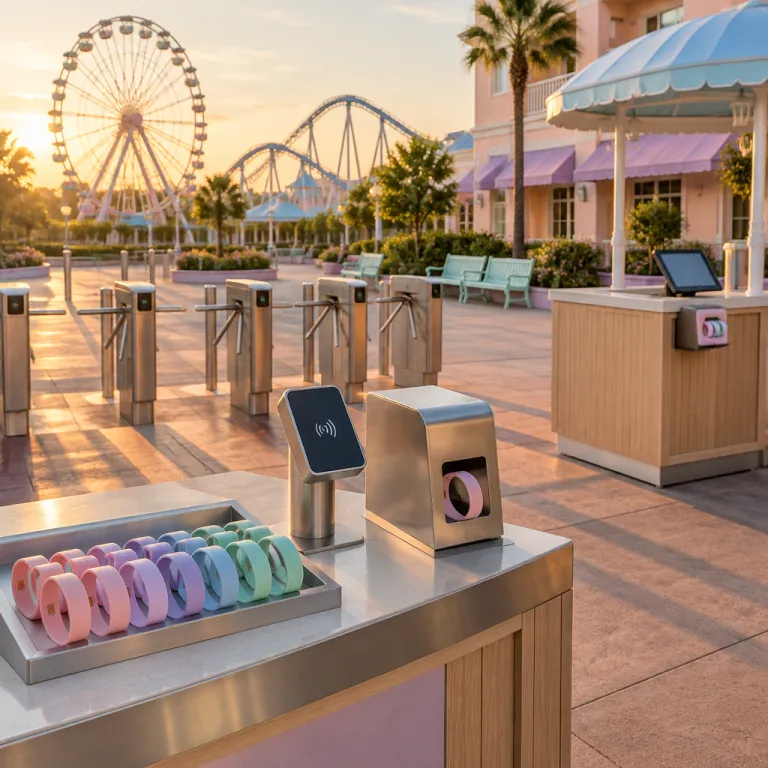
From theme park wristbands to hospitality ecosystem infrastructure
Is vantage a wristband at amusement parks, or something larger for the hospitality ecosystem? The distinction matters for every public institution, fédération professionnelle, and network of park operators seeking scalable models for guest experience and access control. When a single wristband becomes a digital key for a theme park, a water park, and a hotel venue, it starts to function as shared infrastructure rather than a simple gadget.
In leading theme parks, RFID wristbands already act as an integrated system for access, payment, and queue management, and these same principles now influence urban tourism clusters and mixed use resorts. Each RFID wristband connects the guest to a unified ticketing system, a point of sale network, and a data layer that operates in real time across multiple parks and hospitality products. For institutions and investors, this convergence turns a playful wristband into a strategic asset that structures flows, revenues, and guest experiences across an entire territory.
Public authorities evaluating new leisure zones increasingly benchmark how such wristbands work in large amusement parks, because the same logic can support museums, convention centres, and mobility hubs. A vantage style wristband in a theme park or water park can be extended to regional passes, linking transport, culture, and accommodation in one seamless pass for guests. This shift from isolated park solutions to ecosystem wide systems demands governance frameworks, shared standards for RFID, and clear rules on data usage that align with European regulations and national guidance on digital identity.
Industry structure, vantage platforms, and multi stakeholder governance
Understanding whether vantage is a wristband at amusement parks or a broader vantage platform requires mapping the full industry structure. In practice, vantage style systems sit between park operators, hotel groups, technology providers, and public institutions that regulate access control and payments. The result is a layered ecosystem where a simple wristband hides complex agreements on data, interoperability, and revenue sharing.
At the core, a digital system orchestrates RFID wristbands, ticketing system interfaces, and point of sale terminals across theme parks and water parks, while also connecting to hotel PMS and CRM tools. Each staff member who scans a wristband or season pass becomes an operational node, feeding real time données into dashboards used by both private operators and public partners. For investors and clusters tourisme, this architecture transforms parks from isolated venues into data rich anchors of regional tourism ecosystems.
Multi stakeholder alliances are now essential, because no single operator can maintain a fully integrated vantage platform across multiple parks and hospitality assets. Strategic alliances between networks of theme park operators, hotel brands, and payment providers reduce duplication of systems and improve guest experience for domestic and international guests. This logic is analysed in depth in discussions on why solo technology strategies no longer work in hospitality ecosystems, which is directly relevant when public institutions co finance regional platforms and long term concession models.
Guest experience, data flows, and territorial hospitality strategies
For policy makers, the question is not only is vantage a wristband at amusement parks, but how such tools reshape guest experience across an entire destination. When a guest uses one RFID wristband to enter a theme park, pay for water park attractions, and access a partner hotel spa, their journey becomes a continuous data narrative. Each tap of the wristband reveals preferences, peak time patterns, and cross selling potential for different hospitality products.
These data flows allow park operators and hotel networks to coordinate staffing, pricing, and marketing in real time, while public institutions can better understand mobility, crowding, and environmental impact. A vantage platform that aggregates RFID wristbands and digital passes across multiple parks and venues can support dynamic capacity management, shifting guests from saturated attractions to underused cultural sites. For clusters tourisme, this capability turns guest experiences into levers for territorial balance, spreading economic benefits beyond a single park or venue.
Visual storytelling also plays a role, because guests increasingly choose parks and water parks based on perceived atmosphere and comfort. High quality imagery of wristband enabled services, from cashless water park cabanas to seamless hotel check in, reinforces the promise of a frictionless day. This is why strategic work on hospitality photography that reshapes the hotel ecosystem should be aligned with communication around digital wristbands and passes, ensuring that the technology narrative remains human centric and accessible to diverse audiences.
Operational models, staff roles, and public private coordination
On the ground, vantage style wristbands change how staff and systems operate across parks and hospitality venues. A staff member at a theme park gate now manages both physical access control and data quality, because each wristband scan validates a pass, updates capacity counts, and sometimes triggers loyalty rules. Inside the park, staff in restaurants, shops, and water attractions use the same RFID wristbands to process payments and verify age or eligibility for specific products.
For public institutions, this operational shift raises questions about training, labour standards, and data governance, since staff become front line data stewards as well as hosts. When guests use a wristband linked to a credit card or prepaid wallet, the line between financial services and hospitality operations blurs, requiring clear regulatory frameworks and consumer protection rules. Park operators and hotel networks must therefore coordinate with regulators to ensure that the ticketing system, point of sale infrastructure, and vantage platform comply with payment, privacy, and accessibility requirements.
Water parks illustrate these challenges sharply, because RFID wristbands must function reliably in water, manage locker access, and support fast moving flows of guests in swimwear without physical wallets. In such environments, the way wristbands work affects safety, queue times, and overall guest experiences, making operational resilience a public interest issue. Public private taskforces within clusters tourisme can help define shared standards for RFID wristband durability, incident reporting, and interoperability between different parks and venues in the same region.
Business models, revenue streams, and institutional investment logic
From an investment perspective, the question is vantage a wristband at amusement parks becomes a question about platform economics and long term ROI. A unified system that links RFID wristbands, ticketing system data, and point of sale transactions across multiple parks and hotels can unlock new revenue streams. These include dynamic pricing for passes, bundled offers that combine theme park and water park access, and targeted upselling based on real time guest behaviour.
Season pass holders illustrate the potential, because their repeated use of a wristband across parks and partner venues generates highly qualifiés données on frequency, spend, and preferences. When a guest uses the same wristband as a season pass in several theme parks, pays for water activities, and books hotel services, the vantage platform can model lifetime value with precision. Institutional investors can then evaluate not only ticket revenues, but also ancillary spending, cross selling rates, and rétention patterns across the broader hospitality ecosystem.
Public institutions also benefit, because aggregated and anonymised données from wristbands and digital passes help justify infrastructure investments in transport, utilities, and public space around major parks. A transparent framework for pricing, data sharing, and regulatory oversight is essential, as analysed in work on pricing transparency and the new regulatory agenda for travel ecosystems. When such frameworks are in place, vantage style systems can align private profitability with public policy goals, from sustainable mobility to inclusive access for diverse guests.
Scaling vantage style systems across destinations and hospitality networks
Once a vantage style wristband proves effective in one large amusement park, the temptation is to replicate it across multiple parks and hospitality assets. Scaling, however, requires more than copying hardware; it demands interoperable standards, shared governance, and clear roles for each operator and institution. A regional vantage platform that connects several theme parks, water parks, and hotel clusters must handle different tariff structures, branding, and regulatory contexts while preserving a simple guest experience.
For guests, the ideal scenario is a single wristband or digital pass that works seamlessly across parks, public transport, and partner venues, without repeated registrations or confusing rules. Behind the scenes, this implies robust APIs between the central ticketing system, each park operator’s access control infrastructure, and the various point of sale networks. Public authorities can play a convening role, ensuring that no single operator controls the entire system and that data governance respects both competition and privacy principles.
Is vantage a wristband at amusement parks, or a template for destination wide hospitality integration? In practice, it is both a tangible object on a guest’s wrist and a conceptual model for aligning technology, governance, and investment across the hospitality ecosystem. For institutions publiques, fédérations professionnelles, réseaux hôteliers, clusters tourisme, and investisseurs institutionnels, the strategic question is how to adapt this model to local contexts while safeguarding public value and long term resilience.
Key statistics on wristband based systems in parks and hospitality
- Disney’s MagicBand system, an early large scale RFID wristband deployment in theme parks, has been reported to involve an investment of over 1 billion US dollars, illustrating the capital intensity of ecosystem level guest experience platforms (see, for example, analyses in the New York Times and industry case studies on the MyMagic+ programme; figures vary by source and methodology).
- Studies of cashless systems in parks and festivals show that guests typically spend between 15% and 30% more when using RFID wristbands or similar digital wallets compared with cash, which significantly affects revenue projections for park operators and investors (payment industry reports from providers such as Ingenico, Worldline, and cashless festival solution vendors generally converge around this order of magnitude).
- Queue management research in major theme parks indicates that virtual queue and timed entry systems, often linked to digital wristbands or passes, can reduce perceived waiting times by up to 40%, improving guest satisfaction scores and repeat visit intentions (service operations studies published in journals on operations management and leisure services report similar ranges, depending on attraction type and implementation).
- Surveys of European leisure venues adopting integrated ticketing system platforms suggest that multi venue passes can increase cross visitation between partner attractions by 20% to 35%, supporting the case for regional vantage style platforms (tourism board reports and destination management organisation evaluations of city pass schemes typically cite gains within this band).
- Data protection authorities in the European Union highlight that any RFID wristband system used for payments or profiling must comply with GDPR, which has led many park operators to implement privacy by design processes and explicit consent flows for guests (regulatory guidance from the European Data Protection Board and national data protection agencies emphasises data minimisation, purpose limitation, and clear information for users).
FAQ on vantage style wristbands and hospitality ecosystems
Is vantage simply a wristband at amusement parks or a full platform?
Vantage style solutions are not limited to a physical wristband, because the real value lies in the underlying platform that connects access control, ticketing system data, and point of sale networks across parks and hospitality venues. The wristband, or digital pass, is only the interface that guests see. Institutions and investors should therefore evaluate the architecture, governance, and interoperability of the vantage platform rather than focusing solely on the device.
How do RFID wristbands work with credit card payments in parks and hotels?
In most implementations, an RFID wristband is linked to a guest profile and either a stored value wallet or a tokenised credit card, which allows cashless payments at restaurants, shops, and services inside parks and partner hotels. Each transaction passes through the existing point of sale infrastructure and payment gateway, with the wristband acting as a secure identifier. Operators must comply with payment regulations and data protection rules, especially when guests include children or vulnerable groups.
What are the main benefits of wristband systems for public institutions and destinations?
For public institutions, wristband based systems provide high quality données on visitor flows, peak times, and spending patterns across parks and surrounding hospitality venues. This information supports better planning for transport, public safety, and infrastructure investments, while also enabling targeted policies for sustainability and inclusion. When implemented with strong governance, such systems can align private guest experience goals with broader territorial development strategies.
How should clusters tourisme and fédérations professionnelles approach standardisation?
Clusters tourisme and fédérations professionnelles can play a coordinating role by defining shared standards for RFID technologies, data formats, and privacy practices across different parks and hospitality operators. Common frameworks make it easier to create regional passes and vantage style platforms that work across multiple venues, reducing fragmentation for guests. These organisations can also mediate between private operators and public regulators to ensure that innovation remains compatible with legal and ethical requirements.
Are wristband based systems suitable for smaller parks and independent venues?
Smaller parks and independent venues can benefit from modular vantage style systems, especially when they join regional platforms that spread costs and provide shared services. Cloud based ticketing system tools and standard RFID wristbands reduce the need for heavy upfront investment, while still improving guest experiences and operational efficiency. Public support programmes and cooperative purchasing schemes can further lower barriers, making advanced access control and digital passes accessible beyond flagship theme parks.