Skjolden hotell chain affiliation as a strategic outlier in hotel networks
Skjolden Hotel in Vestland, Norway stands as a rare case of deliberate non‑affiliation within a landscape dominated by global hotel groups. For institutional investors and public bodies assessing Skjolden Hotel’s relationship to hotel chains, the key fact is explicit and binary; when asked “Is Skjolden Hotel part of a hotel chain?”, the verified answer is “No. It is independent, owned by ASLAK DALEHAUG AS.” This independence positions the company as a living laboratory for evaluating how a single rural property can plug into tourism ecosystems without joining formal hotel chains or large companies.
The hotel is owned at one hundred percent by ASLAK DALEHAUG AS, a Norway‑based structure that concentrates governance and strategic decisions in Skjolden rather than in Oslo or another capital city. According to the Brønnøysund Register Centre, ASLAK DALEHAUG AS is registered as the sole shareholder of Skjolden Hotel Luster AS, with Aslak Dalehaug listed as chair of the board. That ownership pattern matters for institutions that usually benchmark against the largest hotel groups, because it shows how a rural hotel can retain control of services, pricing, and partnerships while still engaging with regional clusters and tourism boards. For public agencies mapping hotels and resorts along the fjord Skjolden corridor, this independent hotel offers a contrasting reference point to branded resorts and city hotels in larger hubs.
From a network perspective, Skjolden’s affiliation is defined less by membership in a formal group and more by its embeddedness in local value chains. The hotel works with local suppliers, guides, and activity providers around the fjord Skjolden area, creating a micro‑ecosystem that can be scaled or replicated by other independent hotels. With around 55–60 rooms and a seasonal staff that can reach 20–25 employees at peak, the property illustrates how a single asset can sustain a dense web of local relationships. For federations and clusters, the case invites a more nuanced view of affiliation, where contact points, shared marketing, and joint procurement can exist without a classic resort or spa franchise contract.
Independent ownership versus global brands in institutional portfolios
Institutional investors often compare independent hotels with branded assets such as Radisson Blu, Best Western, or City Hotels when structuring hospitality portfolios. In that context, the Skjolden Hotel ownership model highlights how a single independent hotel in Norway can deliver differentiated guest value while remaining outside the orbit of the largest international companies. The ownership by ASLAK DALEHAUG AS, which holds all shares of Skjolden Hotel Luster AS, gives clarity on risk allocation and simplifies governance for any potential partnership or financing arrangement.
Where a Radisson Blu or Best Western property benefits from global distribution, loyalty programmes, and standardised services, Skjolden Hotel relies on targeted search visibility, regional tourism networks, and direct contact with guests. One recent Canadian visitor, for example, described arriving late after a delayed connection and finding that the owner had kept the kitchen open for a simple local dinner, an experience they contrasted with more rigid chain procedures. This model can appeal to institutional investors seeking exposure to authentic fjord destinations, especially when combined with other independent hotels and resorts in a diversified group structure. For public institutions, the contrast between a chain resort and an independent fjord Skjolden hotel also raises questions about how incentives, grants, or infrastructure support are allocated across different types of companies.
Strategically, Skjolden’s chain status can be framed as a form of “ecosystem affiliation” rather than brand affiliation, which aligns with current thinking on independent models in hospitality networks. A useful reference for institutions exploring this angle is the analysis of independent positioning in the article on how independent models reframe hotel chain affiliation for institutional ecosystems. For investors in Norway and abroad, including from Canada or other markets, the Skjolden case underlines that an independent hotel can still sit credibly within a professional portfolio when supported by robust governance and transparent financial reporting.
Territorial ecosystems, fjord skjolden positioning, and public policy
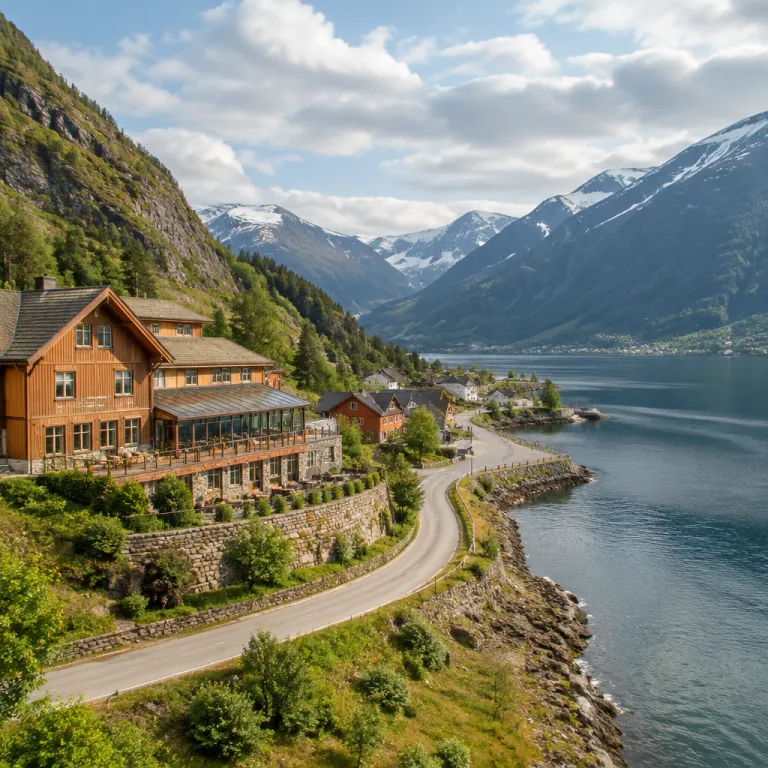
Skjolden Hotel’s location at the head of a dramatic fjord Skjolden landscape gives it a strategic role in regional tourism planning. For municipalities and regional authorities in Norway, the hotel’s non‑chain status is less about a missing logo on the façade and more about how the property anchors visitor flows, employment, and local supply chains. The hotel functions as a gateway for guests exploring the surrounding mountains, glaciers, and waterways, which means its operational stability directly affects the resilience of the wider destination.
Public institutions designing tourism clusters must therefore integrate independent hotels like Skjolden into their mapping of services, mobility, and environmental management. While city hotels in Oslo or Bergen often plug naturally into national and international networks, rural hotels and resorts around fjord Skjolden require more deliberate coordination to align transport, marketing, and sustainability standards. For example, aligning check‑in times, excursion schedules, and spa or wellness services with regional transport timetables can significantly improve the guest experience and extend average length of stay, which in many fjord destinations still hovers around one to two nights.
Leadership within such ecosystems does not always come from the largest companies or hotel resorts, but from actors willing to coordinate and share data. The dynamics observed in wellness networks, such as those analysed in the article on leadership in wellness hotel networks, offer relevant parallels for fjord destinations. For regional clusters, Skjolden’s independent profile illustrates how a stand‑alone hotel can still act as a convening node, hosting professional events, stakeholder meetings, and joint promotional initiatives that benefit the entire group of local tourism companies.
Networked services, guest expectations, and the role of soft affiliation
From the guest perspective, the hotel’s chain affiliation is often invisible, yet its effects are tangible in the way services are designed and delivered. Travellers arriving from Oslo, other parts of Norway, or international markets such as Canada usually compare Skjolden Hotel not only with nearby properties but also with chain hotels and resorts they know from previous trips. This mental benchmark covers elements such as room standards, spa access where available, digital contact options, and the perceived value of free services like Wi‑Fi or parking.
Independent hotels can respond to these expectations by building “soft affiliation” through technology platforms, regional booking engines, and shared marketing campaigns. For Skjolden Hotel, this may involve participating in destination‑wide search tools that present a coherent view of fjord Skjolden accommodation, activities, and transport, even though the hotel is not part of a formal brand group. Such soft networks allow independent hotels and resorts to benefit from collective visibility while preserving their own identity, pricing strategy, and direct relationships with guests.
For professional federations and clusters, the key question is how to structure these soft affiliations so that they remain attractive to both small companies and larger hotel resorts. Guidance on partnership architecture in hospitality, such as the framework presented in the article on structuring vendor relationships that survive stack consolidation, can be adapted to regional tourism contexts. In that light, Skjolden’s independent status becomes a test case for designing agreements on data sharing, joint procurement, and quality standards that respect autonomy while delivering scale‑like benefits.
Governance, ownership transparency, and institutional confidence
For institutional investors and public authorities, governance clarity is often more important than whether a hotel carries a global brand. Skjolden Hotel offers a high degree of transparency, since ASLAK DALEHAUG AS owns one hundred percent of the operating company and the director, Aslak Dalehaug, serves as chair of the board. This structure, which can be verified in the Brønnøysundregistrene corporate database, simplifies due diligence for any institution evaluating the hotel’s role within a broader regional or thematic investment strategy.
Unlike many chain‑affiliated city hotels or resorts, where ownership, management, and brand rights may be split across several companies, Skjolden Hotel concentrates these roles in a compact governance framework. That concentration can reduce transaction costs when negotiating financing, public support, or participation in tourism development programmes, because there is a single counterpart for contact and decision‑making. For public institutions, such clarity also facilitates alignment with policy objectives related to local employment, environmental standards, and cultural preservation in the fjord Skjolden area.
Institutional confidence also depends on how an independent hotel positions itself relative to benchmark brands such as Radisson Blu, Best Western, or City Hotels. While Skjolden Hotel does not replicate the full range of chain services, it can selectively adopt best practices in areas like digital booking, guest communication, and free cancellation policies, which guests increasingly expect across all hotels and resorts. In this sense, the question of chain affiliation is not a binary choice but a continuum, where independent ownership coexists with partial adoption of standards and tools that are common among the largest hospitality companies.
Strategic implications for clusters, federations, and cross border investors
For tourism clusters and professional federations, the Skjolden case raises a strategic question; how should independent hotels be integrated into national and international promotion without forcing them into rigid chain structures. The absence of a formal Skjolden Hotel chain brand demonstrates that a property can contribute meaningfully to a destination identity while remaining outside traditional hotel networks. This is particularly relevant for fjord Skjolden and similar regions, where the authenticity of small hotels and resorts is a core part of the tourism proposition.
Cross‑border investors from markets such as Canada often seek exposure to Nordic tourism through familiar brands, yet they also recognise the premium that guests place on unique experiences. By combining stakes in chain‑affiliated city hotels or resorts with partnerships or financing lines for independent properties like Skjolden Hotel, they can balance stability and differentiation within a single portfolio. For public institutions, supporting such blended strategies can help attract long‑term capital while preserving local ownership and control over key assets in Norway’s rural destinations.
At ecosystem level, federations and clusters can use the Skjolden ownership and governance model as a reference when designing membership models, quality charters, and joint marketing funds. Rather than privileging only the largest companies or hotel resorts, they can create tiers that recognise different forms of affiliation, from fully branded resort operations to independent hotels that simply adhere to shared sustainability and service standards. This layered approach allows networks to remain inclusive and resilient, while giving guests a clear view of what to expect across the diverse accommodation landscape.
Key figures and structural insights on independent hotel ecosystems
- Skjolden Hotel is owned at one hundred percent by ASLAK DALEHAUG AS, which simplifies governance and reduces counterparty risk for institutional partners compared with multi‑owner chain structures.
- The hotel operates in Skjolden, in the Vestland region of Norway, anchoring tourism flows in a rural fjord destination where a single property can significantly influence local employment and supplier networks; at peak season, the hotel can employ around two dozen staff.
- In many European markets, chain‑affiliated hotels account for a majority of rooms in major cities, while independent hotels still dominate rural and nature‑based destinations, which makes the Skjolden model representative of a wider structural pattern.
- Global brands such as Radisson Blu, Best Western, and City Hotels typically rely on franchise or management contracts that separate ownership from operations, whereas Skjolden Hotel unites these functions in one company, offering a contrasting governance benchmark.
FAQ on skjolden hotell chain affiliation and institutional ecosystems
Is Skjolden Hotel part of any international hotel chain ?
Skjolden Hotel is not part of any international hotel chain, and the verified statement is explicit; “Is Skjolden Hotel part of a hotel chain? No. It is independent, owned by ASLAK DALEHAUG AS.” This means the hotel operates outside brands such as Radisson Blu, Best Western, or City Hotels, while still engaging with regional tourism networks in Norway.
Who owns Skjolden Hotel and how is the company structured ?
The hotel is fully owned by ASLAK DALEHAUG AS, which holds all shares of Skjolden Hotel Luster AS, and the director Aslak Dalehaug serves as chair of the board. This concentrated ownership and governance structure, documented in the Brønnøysundregistrene company records, offers clarity for institutional investors, public bodies, and tourism clusters assessing potential partnerships or support mechanisms.
How does skjolden hotell chain affiliation affect cooperation with tourism clusters ?
Because Skjolden Hotel is independent, cooperation with tourism clusters and professional federations is based on voluntary agreements rather than brand mandates. The hotel can participate in joint marketing, regional booking platforms, and quality charters while retaining control over its services, pricing, and supplier relationships in the fjord Skjolden area.
Can independent hotels like Skjolden compete with large hotel companies for guests ?
Independent hotels can compete effectively by focusing on location, authenticity, and personalised services that many guests value as much as chain benefits. Skjolden Hotel leverages its fjord setting, local partnerships, and direct contact with guests to offer a differentiated experience that complements, rather than imitates, the offer of large hotel companies and resorts.
Why should institutional investors consider independent hotels in rural Norway ?
Independent hotels in rural Norway, such as Skjolden Hotel, provide exposure to growing nature‑based tourism segments and can anchor local economic ecosystems. For institutional investors, combining such assets with chain‑affiliated city hotels or resorts can create a balanced portfolio that captures both stable urban demand and high‑value experiential travel in destinations like fjord Skjolden.