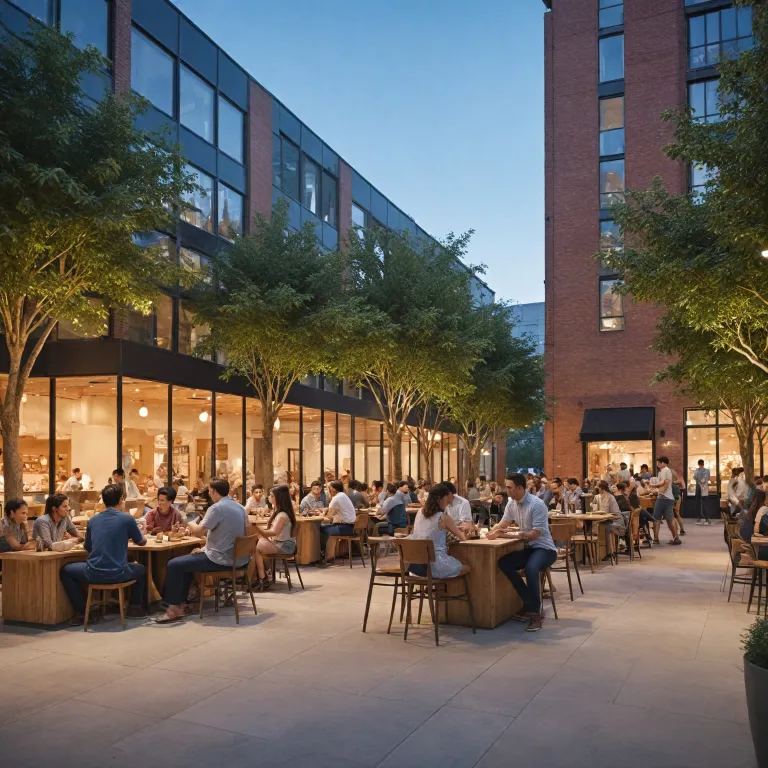
Defining what qsr experience means for hospitality ecosystems
Understanding what is qsr experience is now essential for any hospitality ecosystem that aims to serve customers across multiple formats. In practice, the quick service model blends standardized service with fast preparation of food, supported by digital tools that compress wait times while preserving brand consistency. For public institutions and investors, the qsr experience reveals how service restaurants can orchestrate high volume, low friction interactions at scale.
At its core, a quick service restaurant is designed to move customers efficiently from signage to menu to ordering, then to order collection or table service where relevant. The qsr industry has refined every step of this journey, from digital signage that updates in real time to service kiosks that capture each customer order with minimal friction. When institutions ask what qsr means for broader hospitality, they are really asking how fast food and fast casual formats can inform standards for customer experience in hotels, resorts, and casual dining networks.
For federations and clusters, the qsr customer journey offers a living laboratory of customer service optimization. Speed of service, order accuracy, personalized offers, and technological convenience are key drivers of customer satisfaction in QSRs. This quote encapsulates why qsrs have become reference points for experience digital strategies across tourism ecosystems. By examining what qsr experience delivers at scale, policymakers can better align regulations, incentives, and infrastructure with the realities of omnichannel customer expectations.
From counter to ecosystem: how qsrs influence institutional strategies
When institutions publiques and professional federations evaluate what is qsr experience, they increasingly see it as an ecosystem rather than a single restaurant format. Each quick service restaurant operates within a dense network of technology providers, data analytics firms, and marketing agencies that shape how they serve customers in real time. For investors, this networked structure makes the qsr industry a bellwether for digital transformation in wider hospitality.
The rise of mobile ordering, AI chatbots, and self service kiosks has turned the traditional fast food counter into a distributed digital interface. A qsr customer may start with digital signage outside, refine their choice on a mobile menu, and then complete the order through a service kiosk or voice interface. This omnichannel ordering flow is redefining what qsr means for hotel groups that operate both fast casual outlets and full service restaurants within the same property.
Institutional investors tracking extended stay brands already observe how quick service principles influence network strategy, as shown in analyses of the extended stay ecosystem reshaping hospitality networks. For clusters tourisme, the question is not only what qsr experience looks like today, but how these service restaurants can integrate with urban mobility, tourism flows, and mixed use developments. Aligning qsr business models with public space planning, transport hubs, and tourism corridors becomes a shared agenda for institutions and brands.
Designing the qsr customer journey: signage, wait times, and digital touchpoints
To understand what is qsr experience in operational terms, institutions need to map the full customer journey from street to seat. The first contact often comes through signage, which now blends physical displays with digital signage capable of adapting content to time of day, weather, or local events. Effective qsrs use this interface to guide customers toward the right food choices, reduce perceived wait, and reinforce brand positioning.
Inside the restaurant, the choreography between fast ordering and controlled wait times defines the quality of customer experience. A clear menu, intuitive ordering flows, and visible order status updates help each customer understand what happens next and how long they will wait. When digital systems fail or queues become opaque, even a quick service format can feel slower than casual dining or table service alternatives.
For networks and clusters, these micro interactions offer transferable lessons for other service restaurants and tourism venues. QSRs are implementing mobile ordering apps, self-service kiosks, AI-driven voice ordering systems, and personalized marketing strategies to improve customer experience. This verified perspective aligns with broader hospitality initiatives documented in analyses of global hospitality industry networks driving excellence. By treating each qsr customer journey as a data rich process, institutions can benchmark service standards and inform training, certification, and investment frameworks.
Technology, data, and the institutional governance of qsr experience
As qsrs deepen their use of digital tools, the question of what is qsr experience becomes inseparable from data governance and public policy. Mobile applications, AI chatbots, and voice ordering systems generate detailed records of every order, every wait, and every customer interaction. For institutions publiques, this raises strategic issues around data privacy, interoperability, and equitable access to digital service.
Regulators observe that many qsr customers appreciate the convenience of quick service technologies, yet remain concerned about how their data is used. QSRs are implementing mobile ordering apps, self-service kiosks, AI-driven voice ordering systems, and personalized marketing strategies to improve customer experience. At the same time, challenges include ensuring system reliability, maintaining consistent customer experiences across platforms, and addressing customer concerns about data privacy.
Professional federations can help define standards for customer service that balance innovation with protection, especially as experience digital tools spread from fast food to fast casual and casual dining formats. Clusters tourisme may also coordinate pilots where digital signage, service kiosks, and restaurant ordering systems connect with destination platforms in real time. In this context, what qsr means for the broader ecosystem is a test case for how hospitality networks manage shared infrastructure, shared data, and shared responsibility for the end to end customer experience.
Integrating qsr models into hospitality networks and territorial strategies
For hotel groups, tourism clusters, and city authorities, what is qsr experience becomes a practical question of integration within larger hospitality networks. A single quick service outlet in a transport hub can influence passenger flows, perceived safety, and the attractiveness of the wider destination. When multiple qsrs, fast casual venues, and service restaurants cluster together, they create a micro ecosystem that shapes how visitors move, eat, and wait.
Institutional investors increasingly evaluate how qsr business models align with mixed use developments, convention centers, and tourism corridors. Analyses of binational innovation and institutional networks shaping hospitality ecosystems illustrate how food service concepts can anchor broader place making strategies. In such contexts, the qsr experience is not only about fast food, but about orchestrating customer experience across hotels, retail, and cultural venues.
Public institutions and federations can use qsr customer data to understand peak demand, wait times, and mobility patterns, while respecting privacy. This intelligence supports decisions on transport scheduling, signage placement, and even the mix between table service, quick service, and casual dining options in a district. By treating qsrs as integral nodes in the tourism and hospitality ecosystem, stakeholders can better coordinate investments in digital signage, service kiosks, and shared ordering platforms that serve customers seamlessly.
Strategic implications for institutions, federations, and investors
For decision makers, the strategic value of understanding what is qsr experience lies in its transferability to other hospitality formats. The discipline of managing fast ordering, controlled wait times, and consistent customer service at scale offers a blueprint for high traffic hotels, convention venues, and transport linked restaurants. When qsrs refine their service, they indirectly raise expectations for every other service restaurant within the same destination.
Federations professionnelles can use qsr benchmarks to structure training programs on customer experience, emphasizing how to serve customers efficiently without sacrificing human contact. Clusters tourisme may pilot shared digital signage or cross brand ordering platforms that allow a customer to move between restaurants, fast casual outlets, and casual dining venues with a unified interface. For investors, the qsr industry becomes a leading indicator of how quickly hospitality networks can absorb new technologies and convert them into measurable business performance.
Finally, institutions publiques can integrate qsr experience metrics into broader tourism and urban policies, from licensing frameworks to digital infrastructure planning. By aligning incentives around quick service excellence, they encourage restaurants and qsrs to invest in experience digital tools that benefit the entire ecosystem. In this perspective, what qsr means is no longer limited to fast food, but extends to a shared vision of customer experience that connects brands, territories, and public interest.
Key quantitative signals shaping qsr experience
- 93 % of consumers visit quick service restaurants at least once per month, confirming the central role of qsrs in everyday food and hospitality ecosystems.
- 57 % of customers state that personalized discounts based on order history significantly enhance their qsr customer experience and perceived value.
- 57 % of consumers report that mobile ordering applications have improved their dining experience in quick service environments.
- 80 % of customers consider the quality of technology an important factor when choosing a quick service restaurant or fast food outlet.
- 80 % of consumers have experienced issues with self service kiosks, underlining the need for robust design and support in digital ordering systems.
- 48 % of customers feel comfortable using AI driven voice ordering at fast food restaurants, indicating growing acceptance of advanced digital interfaces.
Key questions institutions ask about qsr experience
What factors drive customer satisfaction in quick service restaurants ?
Speed of service, order accuracy, personalized offers, and technological convenience are key drivers of customer satisfaction in QSRs. For institutions and federations, these factors provide a concise framework for evaluating how well qsrs and other service restaurants align with evolving expectations. They also help define training priorities and performance indicators across hospitality networks.
How are qsrs using technology to enhance customer experience ?
QSRs are implementing mobile ordering apps, self-service kiosks, AI-driven voice ordering systems, and personalized marketing strategies to improve customer experience. These tools reduce wait times, streamline ordering, and enable real time adaptation of menus and offers. Public and private stakeholders can use these examples to guide digital investment strategies across hotels, restaurants, and tourism venues.
What challenges do qsrs face in adopting new technologies ?
Challenges include ensuring system reliability, maintaining consistent customer experiences across platforms, and addressing customer concerns about data privacy. Institutions publiques and regulators must consider these issues when designing supportive yet protective policy frameworks. Federations can also play a role in disseminating best practices and shared technical standards.
How can qsr experience inform wider hospitality and tourism strategies ?
The qsr experience offers a high frequency, data rich view of customer behavior, which can inform decisions on location planning, transport integration, and service mix. By analyzing patterns in ordering, wait times, and channel usage, institutions can better understand how visitors move through destinations. This insight supports more coherent strategies that link quick service outlets with hotels, attractions, and public spaces.
Why should institutional investors monitor developments in the qsr industry ?
Institutional investors see the qsr industry as an early indicator of shifts in customer expectations and technology adoption across hospitality. Innovations that succeed in quick service restaurants often migrate to fast casual, casual dining, and hotel food and beverage operations. Monitoring these trends helps investors anticipate where capital allocation and risk management should evolve within broader hospitality portfolios.